AC Frozen Evaporator Coil Causes Explained
A frozen indoor AC coil can turn a normally comfortable Florida home warm and sticky quickly. Understanding AC frozen evaporator coil causes can help you take the right first step, avoid damaging the system, and know when the problem needs same-day AC repair.
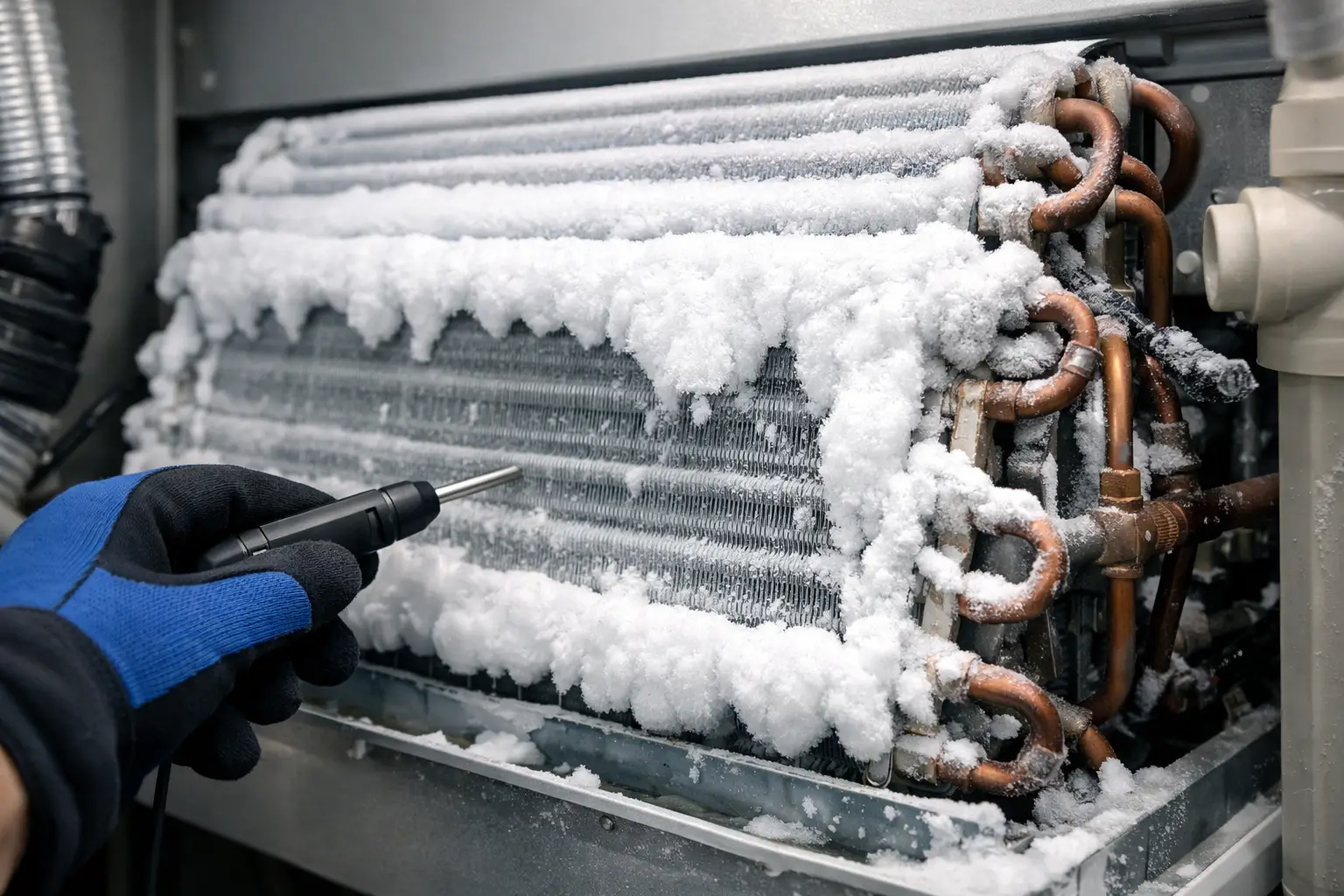
The evaporator coil is the indoor part of your air conditioner that absorbs heat from your home. It is supposed to get cold, but it should not build up a layer of frost or ice. When it does, the system can no longer transfer heat effectively. Airflow weakens, vents may blow warm air, and water may appear around the indoor unit as the ice melts.
What to Do When Your AC Coil Is Frozen
Turn the cooling setting off at the thermostat. If your thermostat has a fan-only setting, turning the fan to ON can help move room-temperature air across the coil and speed up thawing. Do not keep running the AC in cooling mode to force it to work. That can strain the compressor and turn a repairable problem into a more expensive one.
Do not chip at the ice with a screwdriver, knife, or other sharp object. Evaporator coils and refrigerant lines are easy to puncture. Let the ice thaw naturally, place towels around the air handler if needed, and check for water before restarting anything.
A frozen coil is a symptom, not a diagnosis. The real issue is usually one of two things: not enough warm air is moving across the coil, or the refrigerant system is not operating at the correct pressure.
AC Frozen Evaporator Coil Causes Homeowners See Most Often
Restricted airflow from a dirty air filter
A clogged filter is one of the most common and most preventable causes. Your AC needs a steady volume of household air moving across the evaporator coil. When a filter is packed with dust, pet hair, or construction debris, airflow drops. The coil gets colder than it should and moisture in the air freezes onto it.
Check the filter first, especially if it has been more than one to three months since it was replaced. The right schedule depends on the filter type, pets, household allergies, and how heavily your system runs. In Central Florida, an AC system often works hard for much of the year, so filters can load up faster than homeowners expect.
Replacing a dirty filter may help prevent future freezing, but it may not solve every frozen-coil issue. If the coil continues to ice up after the filter is changed and the system has completely thawed, it needs professional troubleshooting.
Closed vents, blocked returns, or duct problems
Closing supply vents in unused rooms may seem like a way to save energy, but most residential HVAC systems are designed to operate with their airflow paths open. Too many closed vents can raise static pressure and reduce the air moving through the system.
Furniture, rugs, curtains, and storage boxes can also block supply registers or return-air grilles. Return vents are especially important because they pull air back to the indoor unit. A blocked return can starve the system of airflow even when every supply vent appears open.
Leaky, crushed, disconnected, or undersized ductwork can create similar problems. Duct issues are not always visible from inside the home, which is why a technician may need to inspect the attic, air handler, and airflow readings before recommending a repair.
A dirty evaporator coil or blower component
Even with a clean filter, dust can eventually collect on the coil and blower wheel. Florida humidity can make that buildup sticky, allowing it to trap more dirt over time. A dirty coil has less surface area available to absorb heat, while a dirty blower wheel may not move enough air to keep the coil operating normally.
This is one reason preventive AC tune-ups matter. Cleaning the parts that homeowners cannot safely reach can improve airflow, help reduce strain on the equipment, and catch small issues before they leave you without cooling on a hot afternoon.
Low refrigerant caused by a leak
Refrigerant does not get used up like fuel. If the level is low, there is usually a leak somewhere in the system. Low refrigerant lowers pressure in the evaporator coil, which can make the coil temperature fall below freezing. Ice then builds across the coil and refrigerant line.
Signs that can point to a refrigerant problem include reduced cooling, longer run times, hissing or bubbling sounds, and ice returning after the system has thawed. However, those signs alone are not enough to confirm the issue. A technician should test pressures, locate the leak when possible, make the proper repair, and then charge the system to manufacturer specifications.
Adding refrigerant without addressing the leak is only a temporary patch. It can leave you paying for repeated service while the underlying problem continues.
Blower motor, capacitor, or control failure
Your indoor blower is responsible for moving air across the evaporator coil. If the motor is weak, a capacitor is failing, the blower wheel is dirty, or a control issue keeps the fan from operating at the correct speed, the coil may freeze.
This type of problem can be confusing because the outdoor unit may still run. Homeowners may hear the system operating and assume everything is working, even though there is little air coming from the vents. If airflow is noticeably weak throughout the house, turn the cooling system off and arrange service rather than waiting for the ice to worsen.
Thermostat settings and unusually cool conditions
A thermostat set too low will not usually freeze a healthy system by itself, but it can expose an airflow or refrigerant issue. During a cool Florida evening, running the AC for a long period when outdoor temperatures are unusually low can also contribute to coil freezing, particularly in a system with another underlying problem.
A reasonable thermostat setting, clean filter, and open vents are good starting points. Still, repeated freezing is not something to solve by constantly changing the temperature setting. The system should be checked for the mechanical reason behind it.
Metering device or other refrigerant-system problems
Some coil freezes are caused by a restriction or malfunction in the component that controls refrigerant flow into the evaporator coil. A failing expansion valve, a restricted line, or another internal refrigeration issue can create abnormal pressure and temperature conditions.
These problems require professional diagnosis. Refrigerant work involves specialized equipment, electrical components, and system-specific measurements. Guessing at the cause can lead to unnecessary parts replacements or further damage.
Why a Frozen Coil Should Not Be Ignored
It is tempting to thaw the system, replace the filter, and hope for the best. That is reasonable as an immediate step when the filter is clearly dirty. But if the coil freezes again, continuing to run the unit can put the compressor at risk. The compressor is one of the most costly AC components to replace.
A frozen coil can also lead to water damage. As the ice melts, the drain pan may overflow if it cannot handle the volume of water or if the condensate drain has its own blockage. Water near the air handler, ceiling staining, or a tripped float switch deserves prompt attention.
For households with older equipment, the repair decision may depend on the cause, the condition of the system, refrigerant type, and the unit's repair history. A minor airflow repair is very different from a major refrigerant leak or compressor failure. A clear diagnosis lets you compare repair and replacement options based on your home and budget rather than making a rushed decision in the heat.
When to Call for AC Repair
Call for professional help if the coil freezes again after thawing, airflow stays weak after a filter change, the system blows warm air, or you see water leaking around the indoor unit. You should also call if the outdoor unit runs but indoor air is barely moving, or if ice is visible on the refrigerant line outside.
Savage Heating & Air provides same-day AC repair for homeowners across Central Florida, with no overtime charges. A technician can identify whether the problem is airflow, a refrigerant leak, a blower issue, or another system fault, then explain the practical next step before work begins.
The safest move is simple: turn cooling off, let the coil thaw, replace a visibly dirty filter, and keep vents and returns clear. If the ice comes back, treat it as your AC's signal that it needs attention before a small comfort problem becomes a larger repair.
Comfort starts with a call
Same-day HVAC service across Brevard, Orange, Osceola, Seminole & Volusia.
Call 321-804-4413