
AC Leaking Water Inside House? What to Do Now
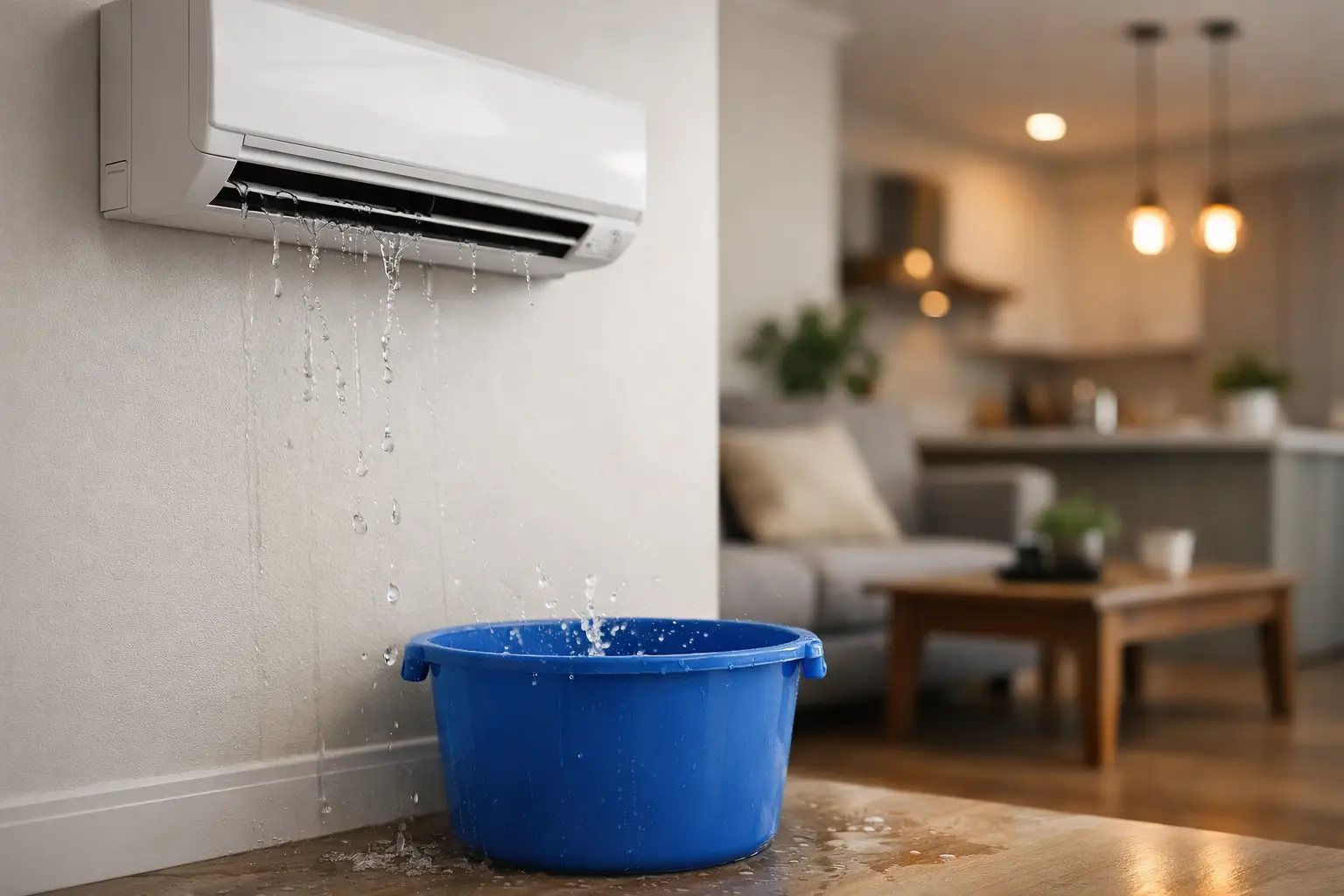
A puddle beneath an indoor air handler, a wet ceiling, or water dripping from a supply vent can turn a normal Florida afternoon into an urgent home repair. If your AC is leaking water inside the house, act quickly to protect flooring, drywall, insulation, and electrical components. The good news is that many leaks start with a drainage problem, not a failed AC system. The bad news is that continued operation can make a small issue expensive.
Start by protecting the area, then arrange a professional inspection if the leak is more than minor condensation. Central Florida's heat and humidity make air conditioners work hard, and that means they remove a great deal of moisture from your indoor air every day.
What to Do When Your AC Is Leaking Water Inside the House
If water is actively dripping from the unit, ceiling, or vent, turn the thermostat to OFF. This stops the cooling cycle and reduces the amount of condensation the system produces. Do not keep running the system simply because it is still blowing cool air. Water can overflow into places you cannot see.
Place towels, a shallow pan, or a bucket under the leak if it is safe to do so. Move furniture, rugs, boxes, and electronics away from the area. If water is near electrical wiring, a breaker panel, or an outlet, avoid the area and call for help right away.
Next, check your air filter. A heavily clogged filter can restrict airflow enough to freeze the indoor evaporator coil. When that ice melts, the resulting water may overwhelm the drain pan or leak from the unit. If the filter is dirty, replace it with the correct size and type. Then leave the AC off long enough for any ice to melt before having the system checked.
A clean filter may help prevent future trouble, but it will not clear a blocked drain line, repair a cracked pan, or fix a refrigerant issue. If water continues to appear, do not assume the problem has solved itself.
Why an Indoor AC Unit Produces Water
Your air conditioner does more than cool the air. As warm, humid indoor air moves across the cold evaporator coil, moisture condenses on the coil. That moisture should collect in a drain pan and flow through a condensate drain line to the outside or a designated drain.
In Florida, this process is constant for much of the year. A properly working system can remove gallons of water from the air in a day. When the drainage path is restricted or airflow is poor, that water has to go somewhere - and it may end up inside your home.
Common Causes of an AC Water Leak
A clogged condensate drain line
This is one of the most common reasons for AC water leaks inside a house. Algae, mold, dust, and debris can build up in the condensate line over time. Water backs up into the drain pan and eventually overflows.
Some systems have a float switch designed to shut the AC off when the drain backs up. If yours does not, or if the switch is not working, the first sign may be water on the floor or damage around the air handler. A technician can clear the line, check its slope and connections, and make sure the safety switch is operating correctly.
A rusted, cracked, or misaligned drain pan
Older systems may have drain pans that corrode, crack, or shift out of position. Even a small crack can leak steadily while the system runs. Some air handlers also use a secondary pan beneath the unit, particularly when it is located in an attic or closet. A problem with either pan can allow water into the home.
Drain pan repair depends on the unit's design and condition. In some cases, a replacement pan is practical. In others, the age and accessibility of the equipment may affect the recommendation.
A frozen evaporator coil
Ice on the indoor coil is not normal. It usually points to restricted airflow, low refrigerant, a blower problem, or another performance issue. Once the system turns off or the ice begins to melt, a large amount of water can flow into the pan at once.
A dirty filter is the simplest possible cause, but it is not the only one. Low refrigerant can also cause the coil to become too cold. Refrigerant is not something a homeowner should add or handle. It requires proper diagnosis and repair by a qualified HVAC technician.
A disconnected or damaged drain line
Drain lines can crack, loosen at a fitting, sag, or become damaged by age and heat. If the line separates near the air handler, water may spill directly into a closet, garage, attic, or utility area. The leak can be easy to miss when the system is tucked away above a ceiling or behind a door.
Condensation on poorly insulated components
If cold refrigerant lines or ductwork are not insulated correctly, humid air can condense on their surfaces. This may look like a leak even though the drain line is functioning. It is more likely in hot, humid conditions and in attics, garages, and other unconditioned spaces.
Water From a Vent or Ceiling Needs Prompt Attention
Water dripping from a ceiling vent is more serious than a small puddle beside an air handler. The water may be coming from a backed-up drain pan in the attic, a damaged drain line, or excessive duct condensation. It may also have traveled along framing or ductwork before becoming visible.
Turn the system off and avoid pressing on wet drywall. Saturated ceilings can sag or collapse. Water damage can also create conditions for mold growth if drying and repairs are delayed. A technician can locate the AC-related source, while a restoration professional may be needed if the damage is widespread.
When You Can Try a Simple Check and When to Call
Homeowners can safely replace a dirty filter, clean up standing water, and visually inspect the area around an accessible indoor unit. If you see a clogged filter and no active leak after the system has thawed, replacing the filter is a reasonable first step.
Call for AC repair when the drain pan is full, water returns after cleanup, the system has frozen, the unit is not cooling properly, or the leak is coming from a ceiling or vent. You should also call if you notice musty odors, repeated high humidity, or a drain safety switch that keeps shutting the system down. Those signs can point to a problem that needs more than a quick cleanup.
For Central Florida homeowners, same-day AC repair can prevent a drainage issue from becoming a damaged ceiling, wet insulation, or interrupted comfort during extreme heat. Savage Heating & Air provides residential service with no overtime charges, so you can get a clear assessment without waiting for a small leak to grow.
How Preventive Maintenance Helps Stop Future Leaks
An annual AC tune-up is one of the best ways to catch condensate problems before water reaches your home. During maintenance, the technician can inspect the drain pan, flush the condensate line, verify drainage, check the float switch, examine the evaporator coil, and look for airflow concerns.
Between visits, change filters on schedule. The right timing depends on the filter type, pets, household activity, and indoor air quality needs, but many homes benefit from checking the filter monthly and replacing it when it is visibly dirty. Keep the area around the indoor unit clear so service access and airflow are not restricted.
If your system leaks more than once, ask whether the drain setup, equipment age, humidity levels, or duct insulation may be contributing. Repeated leaks are not something to accept as normal Florida AC behavior. A properly maintained system should manage condensation without sending it onto your floor or through your ceiling.
Water around your AC deserves a timely response, even when the house still feels cool. Stopping the system, protecting the area, and getting the source identified early can save you from much larger repairs later.
Comfort starts with a call
Same-day HVAC service across Brevard, Orange, Osceola, Seminole & Volusia.
Call 321-804-4413