Air Conditioner Not Cooling but Running? What to Do
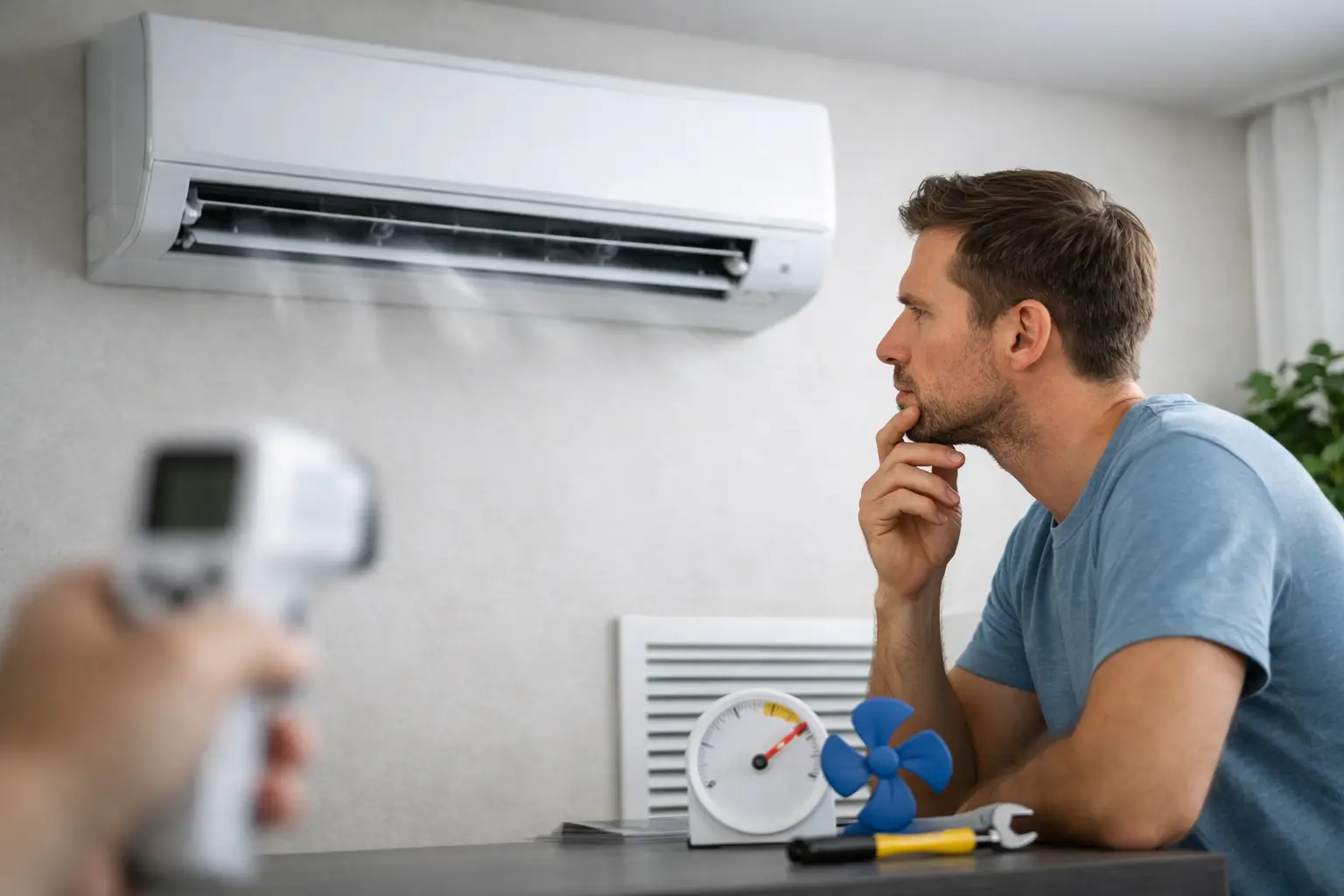
When the thermostat says 76 but the house feels like a Florida garage, an air conditioner not cooling but running is more than an inconvenience. You may hear the indoor fan, see the outdoor unit operating, and still get warm air from the vents. A few safe checks can rule out simple problems, but continuing to run a struggling system can turn a smaller repair into a larger one.
Start with the checks that do not require tools
Before resetting breakers or opening equipment panels, check the thermostat. Make sure it is set to Cool, the temperature setting is at least 3 to 5 degrees below the current indoor temperature, and the fan setting is on Auto rather than On. When the fan is set to On, it can keep circulating air between cooling cycles. That air may feel warm even though the system is not actively cooling.
Next, inspect the air filter. A heavily clogged filter restricts airflow, which can cause the indoor evaporator coil to get too cold and freeze. When that happens, airflow may weaken, rooms may become humid, and the air coming from vents may not cool the home. If the filter is visibly dirty, replace it with the correct size and avoid using an overly restrictive filter unless your system is designed for it.
Check that supply vents are open and not blocked by furniture, rugs, or curtains. Also make sure the return-air grille is clear. Closing multiple vents does not usually save energy. It can reduce airflow and add strain to the system.
Finally, look at your electrical panel. A tripped breaker can stop part of the system while leaving another part running. If an AC breaker has tripped, you can reset it once. If it trips again, leave it off and schedule service. Repeated resets can damage equipment and create an electrical safety concern.
Why an air conditioner can run without cooling
“Running” does not always mean every part of the air conditioner is working. Your indoor blower may be moving air while the outdoor unit is not producing enough cooling. Or the outdoor unit may be on, but a component inside it may be unable to start or operate correctly.
A frozen evaporator coil
A frozen coil is common during Central Florida's long cooling season. Restricted airflow from a dirty filter, a blower problem, blocked vents, or a refrigerant issue can cause the coil to ice over. You may notice weak airflow, ice on the refrigerant line near the indoor unit, or water around the air handler after the ice starts melting.
If you see ice, turn the thermostat to Off and set the fan to On to help thaw the coil. Do not chip at ice or pour hot water on the equipment. Thawing can take several hours, and the reason it froze still needs to be identified. Restarting an iced system too soon can put unnecessary stress on the compressor.
A clogged condensate drain
Your AC removes moisture as it cools. In Florida, that moisture can add up quickly. If the condensate drain line clogs, many systems shut down the cooling function through a safety switch to prevent water damage. Depending on the setup, you may still hear the fan running.
A full drain pan, water near the air handler, or a drain line that is not dripping outside when the AC has been operating can point to a drainage issue. Avoid bypassing a float switch. It is there to protect your ceiling, walls, and equipment from an overflow.
Outdoor-unit trouble
The outdoor condenser releases heat from your home. If its fan is not spinning, if it is making a loud buzzing sound, or if it starts and stops repeatedly, the issue could involve a capacitor, contactor, fan motor, compressor, wiring, or another electrical component. These repairs require a trained HVAC technician.
Keep leaves, grass clippings, and stored items at least a couple of feet away from the outdoor unit. A clear area supports airflow, but do not remove panels or spray electrical components with a hose. A dirty outdoor coil can reduce cooling performance, yet cleaning it properly requires the right approach to avoid bending fins or damaging the unit.
Low refrigerant from a leak
Refrigerant does not get used up like fuel. If the charge is low, there is typically a leak that must be located and repaired. Low refrigerant can cause poor cooling, longer run times, frozen coils, and higher energy bills.
Adding refrigerant without addressing the leak is not a long-term repair. A technician should evaluate the system, verify the charge, inspect for leaks, and explain whether repair makes sense for the age and condition of the equipment.
Ductwork or airflow problems
Sometimes the AC is cooling, but the cooled air is not reaching the rooms that need it. Leaky, disconnected, crushed, or poorly insulated ductwork can waste conditioned air in an attic or crawl space. Uneven temperatures, weak airflow in one section of the home, or rooms that never seem to catch up may point to an airflow or duct issue rather than a failed outdoor unit.
What to do while you wait for AC service
If the system is blowing warm air, set the thermostat to Off rather than allowing it to run continuously. This is especially important if you suspect a frozen coil, hear unusual noises, smell something burning, or see water around the equipment. Keeping the system off can help prevent additional damage and gives a technician a clearer starting point.
You can close blinds and curtains on sun-facing windows, use ceiling fans to improve comfort, and limit oven use during the hottest part of the day. Ceiling fans cool people, not rooms, so turn them off when no one is present. If anyone in the home is medically vulnerable to heat, move them to a cooler location while repairs are arranged.
Do not attempt to handle refrigerant, replace capacitors, or work inside electrical panels. AC equipment contains high-voltage components even when the thermostat is off. A professional diagnosis is safer and helps avoid paying for parts that do not solve the actual problem.
When to schedule same-day repair
A same-day call is the right move when your system is running but not lowering the indoor temperature, particularly during hot or humid weather. It is also wise to call promptly if the breaker repeatedly trips, the unit makes grinding or buzzing sounds, there is ice on the refrigerant line, airflow has dropped sharply, or water is collecting around the indoor equipment.
For homeowners across Brevard, Orange, Osceola, Seminole, and Volusia counties, Savage Heating & Air provides same-day AC repair with no overtime charges. A technician can separate a simple thermostat, filter, or drain issue from compressor, electrical, refrigerant, or airflow problems and give you clear repair options before work begins.
Prevent the next cooling interruption
Most no-cooling calls are not fully preventable, but routine maintenance reduces the chances of being surprised on a hot afternoon. Replace filters on schedule, keep the outdoor unit clear, watch for changes in airflow or humidity, and have the system inspected before peak summer demand. During a tune-up, a technician can check electrical connections, drainage, coils, refrigerant performance, and key moving parts before a small issue becomes a shutdown.
If your air conditioner is older and repairs are becoming frequent, the best decision may depend on repair cost, system efficiency, warranty status, and how well the unit handles your home's humidity. There is no benefit in replacing equipment that has a sensible repair left in it, but there is also no reason to keep investing in a system that cannot provide dependable comfort. A prompt diagnosis gives you the information needed to protect both your home and your budget.
Comfort starts with a call
Same-day HVAC service across Brevard, Orange, Osceola, Seminole & Volusia.
Call 321-804-4413