
Best Thermostat Settings for Florida Homes
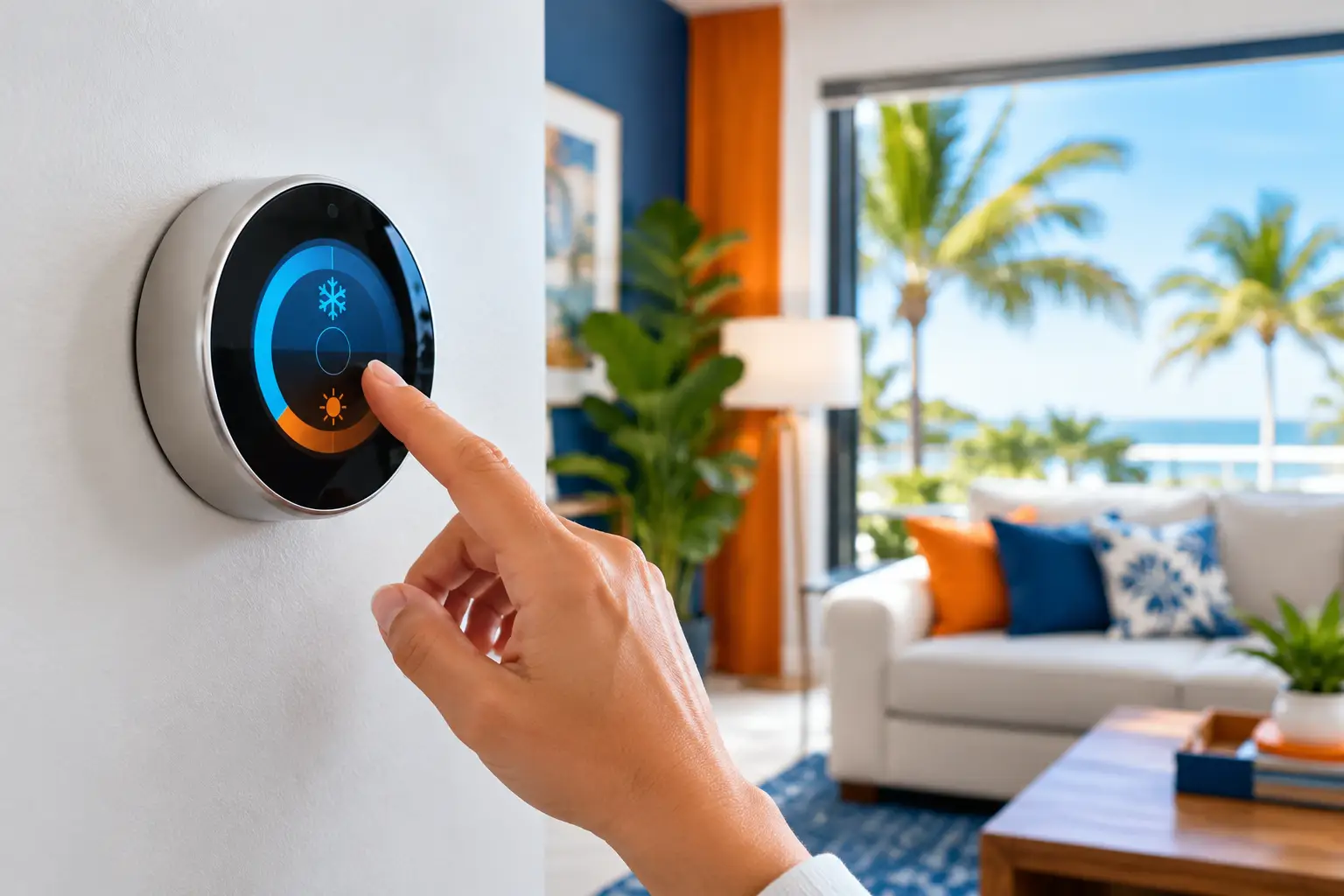
Florida heat does not give your air conditioner much of a break. The best thermostat settings Florida homes can use are the ones that keep indoor humidity under control, protect the equipment from constant strain, and still let your household sleep comfortably. There is no single temperature that works for every family, but a few practical targets make a meaningful difference.
A good everyday setting: 76-78 degrees
For most occupied Florida homes, setting the thermostat to 76 to 78 degrees is a sensible starting point. This range balances comfort and energy use without forcing the AC system to run at its hardest pace all day. If 78 degrees feels warmer than expected, check the humidity level before dropping the temperature. High indoor humidity can make a room feel sticky even when the thermostat reading looks reasonable.
For many homeowners, 76–78°F is a reasonable starting range during normal cooling conditions, especially if they work from home, have young children, or have family members who are sensitive to heat. That is completely reasonable. The trade-off is higher cooling costs and longer run times, particularly through summer afternoons.
If you choose 75 degrees or lower, your system may still maintain the setting when properly sized and maintained. But lower settings are not automatically better. They increase demand on the equipment and can expose an existing issue, such as a dirty filter, clogged drain line, low refrigerant charge, or weak airflow.
Best thermostat settings for Florida homes at night
Many homeowners choose a slightly different nighttime setting based on comfort, humidity, and sleeping preferences. Bedrooms often feel warmer because doors stay closed, body heat builds up, and bedding holds warmth. A ceiling fan can help you stay comfortable at a slightly higher setting by moving air across the skin.
Fans do not lower the room temperature, so turn them off when the room is empty. Their value is personal comfort, not direct cooling. Used correctly, a fan may let you set the thermostat one or two degrees higher overnight without sacrificing sleep.
Do not make drastic temperature changes before bed. Lowering the thermostat from 78 to 68 degrees will not cool the home faster. Most systems cool at a steady rate. The much lower setpoint simply tells the AC to keep running longer, which can lead to an overly cold home and unnecessary energy use.
Keep humidity in the comfort range
Florida comfort is about more than temperature. A home at 77 degrees with humidity near 45% to 55% can feel more comfortable than a 73-degree home with humidity above 60%. Excess humidity can also contribute to musty odors, window condensation, and conditions that support mold growth.
Your air conditioner removes moisture as it cools, but it needs adequate run time and proper airflow to do that job. Constantly setting the thermostat too high can leave the home warmer and more humid. On the other hand, an oversized system may cool the air quickly but shut off before removing enough moisture. If the house feels clammy despite a normal thermostat setting, the problem may not be the temperature setting at all.
When Your Thermostat Setting Isn't the Problem
If your home remains uncomfortable even when the thermostat is set within a reasonable range, changing the temperature repeatedly may not solve the problem. Weak airflow, a dirty filter, ductwork issues, low refrigerant, an aging system, poor insulation, or excessive indoor humidity can all affect comfort.
In Central Florida, humidity is especially important. A home can feel uncomfortable even when the thermostat shows a relatively low temperature if moisture levels remain high.
If your AC is running constantly but your home still feels warm, humid, or unevenly cooled, the issue may be with the HVAC system rather than the thermostat setting. That's when it's worth having the system checked instead of continuing to lower the thermostat.
What to set the thermostat when nobody is home
For a typical workday, raise the setting to 80 to 82 degrees while the house is empty. This reduces cooling demand without allowing the home to become excessively hot or humid. In Florida, turning the AC off entirely is usually not a good idea. The indoor temperature and humidity can climb quickly, and the system then has to work hard for a long time to recover.
A smart or programmable thermostat can make this easy. Schedule the temperature to rise after everyone leaves and return to your preferred setting 30 to 60 minutes before the first person gets home. The best schedule depends on your home's insulation, sun exposure, thermostat location, and how quickly the system recovers.
For longer trips, 82 to 85 degrees is usually a safer range than shutting the system down. Keep the fan setting on Auto rather than On. In Auto mode, the blower runs only during a cooling cycle. In On mode, it can continue circulating air across a damp indoor coil after cooling stops, which may add some moisture back into the home.
Why a small adjustment can affect your bill
Every degree lower increases the amount of heat your AC must remove from the house. During a hot Florida afternoon, that difference can mean longer cooling cycles and a higher electric bill. The exact impact varies by home and equipment, but small adjustments are generally more useful than extreme changes.
Try raising your normal setting by one degree for a week. If the home remains comfortable, keep it there. If it feels stuffy, look at airflow and humidity before assuming the answer is a colder thermostat setting. Replace a dirty air filter, keep supply vents open, and make sure furniture or rugs are not blocking return grilles.
Window coverings also matter. Closing blinds or curtains on sunny windows can reduce heat entering the home. So can sealing air leaks around doors and attic access points. These steps allow the thermostat to work with your home rather than asking the AC to overcome avoidable heat gain.
Avoid thermostat habits that strain the system
A thermostat cannot fix an AC problem, and repeatedly changing settings can make it harder to recognize one. If the system runs continuously but cannot reach 76 to 78 degrees during peak heat, first check the filter and confirm that the outdoor unit has clear space around it. Then pay attention to whether air is coming from the vents and whether it feels cool.
Call for service if the system blows warm air, freezes up, trips a breaker, leaks water, makes unusual noises, or cannot hold a normal setting that it previously maintained. Florida systems work hard, and small maintenance issues can become urgent failures when temperatures rise.
Avoid closing too many vents in unused rooms. Central HVAC systems are designed for a certain amount of airflow. Restricting that airflow can create pressure problems, reduce efficiency, and contribute to coil freezing. If some rooms are consistently too hot or too cold, the solution may involve ductwork, insulation, thermostat placement, zoning, or equipment sizing rather than closed vents.
Settings for households with different needs
The right setting should account for the people in the home. Older adults, infants, pets, and people with health conditions may need a cooler, more consistent environment. A home with large west-facing windows or a second floor that gets afternoon sun may also need a different approach than a shaded, well-insulated home.
If one area is always uncomfortable, do not keep lowering the whole-house thermostat to compensate. That often overcools other rooms and raises costs. A technician can identify whether the issue involves low airflow, duct leakage, insufficient return air, insulation gaps, or a system that is not properly matched to the home.
A practical Florida thermostat routine
Start with 76 to 78 degrees when the home is occupied, 72 to 75 degrees at night if that supports comfortable sleep, and 80 to 82 degrees while the house is empty. Keep indoor humidity near 45% to 55% when possible, and make only small changes as you learn how your home responds.
If your AC cannot keep the home comfortable, do not wait for a complete breakdown in the middle of a hot week. Savage Heating & Air provides same-day AC repair across Central Florida with no overtime charges, so homeowners can get a clear answer and practical next steps when cooling performance changes.
A thermostat setting should support your comfort, not make you manage a constant battle with heat and humidity. Set a reasonable target, keep the system maintained, and treat a sudden change in performance as a signal worth checking early.
Comfort starts with a call
Same-day HVAC service across Brevard, Orange, Osceola, Seminole & Volusia.
Call 321-804-4413