Heat Pump vs Air Conditioner for Florida Homes
When your AC is struggling through a Central Florida summer, the last thing you need is a replacement recommendation filled with jargon. The heat pump vs air conditioner decision comes down to a practical question: Do you want a system that cools your home and can also handle most of your heating needs?
For many Florida homeowners, a heat pump is worth serious consideration because our winters are generally mild. But it is not automatically the right answer for every home. Your existing equipment, ductwork, budget, comfort preferences, and the condition of the system all matter.
Heat Pump vs Air Conditioner: The Main Difference
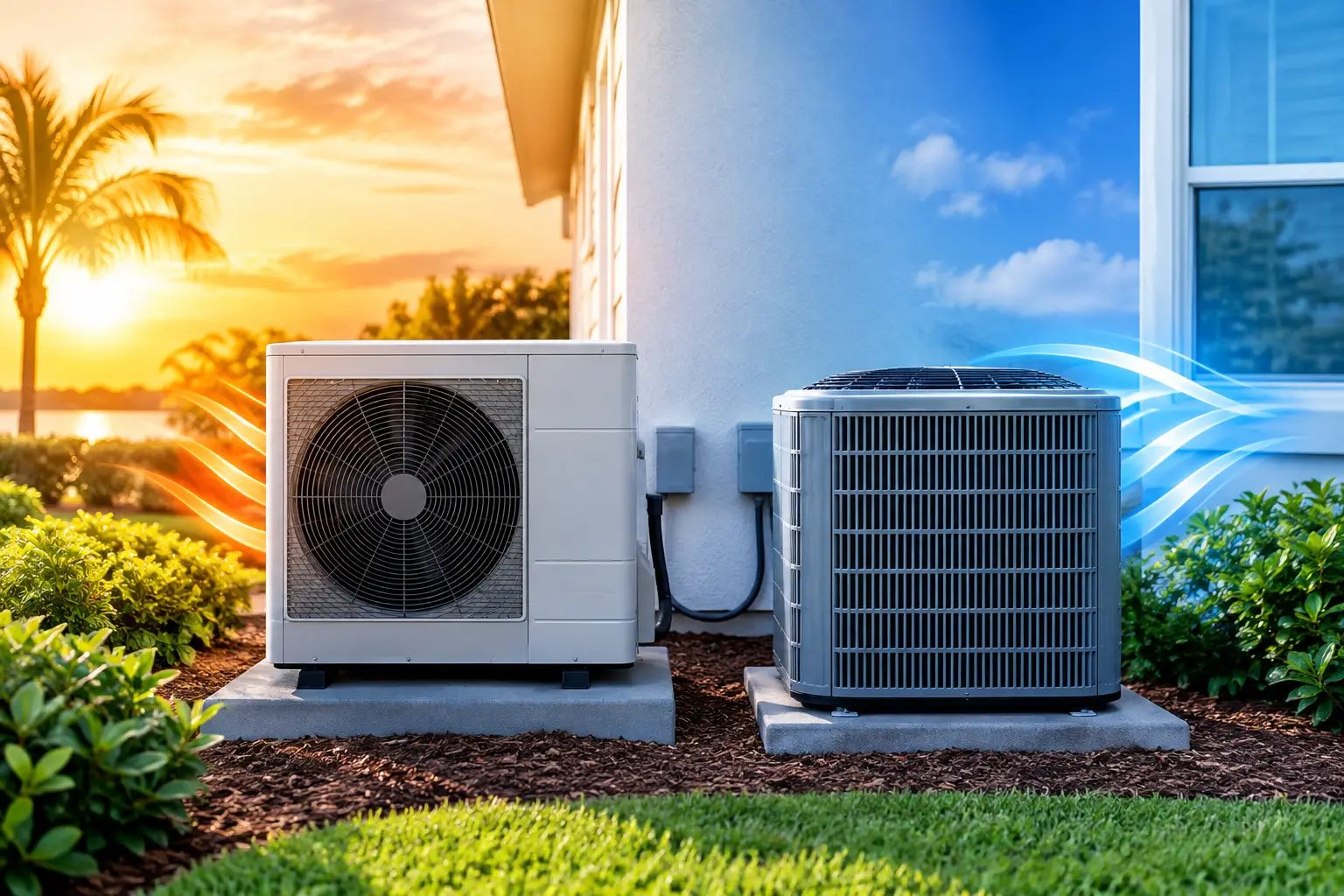
Both systems use refrigeration to move heat out of your home during cooling season. That is why a heat pump and a central air conditioner can feel very similar on a hot July afternoon. Each uses an outdoor unit, an indoor coil, a thermostat, refrigerant lines, and a blower to deliver conditioned air through your ducts.
The difference appears when temperatures drop. A traditional central air conditioner only cools. It needs a separate heating source, usually an electric furnace or air handler with electric heat strips in many Florida homes.
A heat pump can reverse its refrigeration cycle. Instead of moving heat out of the house, it pulls available heat from outdoor air and moves it indoors. Even when the air outside feels chilly, it still contains heat a properly operating heat pump can use.
That gives a heat pump two jobs: cooling in warm weather and heating during most cool weather. It does not create heat by burning fuel. It transfers heat, which can make it an efficient option in Central Florida.
How They Compare in a Florida Home
A heat pump and an air conditioner should provide comparable cooling performance when they are correctly sized, installed, and maintained. A heat pump is not a weaker version of an AC unit. In cooling mode, it operates much like one.
The more meaningful comparison is how each system handles the few months when homeowners turn on the heat. With a standard AC system, the electric heat strips in the air handler often do the heating. These strips can warm the home quickly, but they use more electricity than a heat pump during moderate weather.
A heat pump usually handles mild cold efficiently on its own. During a rare hard freeze, it may rely on auxiliary electric heat to maintain indoor comfort. That is normal. The goal is not to avoid auxiliary heat at all costs, but to make sure the system is designed and controlled correctly for your home.
Cooling and humidity control
Florida comfort is about more than thermostat temperature. High humidity can make a 75-degree home feel sticky and uncomfortable, while excess moisture can contribute to musty odors and indoor air concerns.
Neither system wins automatically on humidity control. Proper sizing matters more. An oversized air conditioner or heat pump may cool the home too quickly, shutting off before it has enough run time to remove moisture effectively. A system that is too small may run constantly and still struggle during peak heat.
A qualified installation should account for square footage, insulation, windows, ceiling height, duct condition, sun exposure, occupancy, and other factors. Replacing a unit with the same size simply because the old one had that capacity is not always the right approach.
Heating performance
For homes that need reliable heat during Florida cold snaps, both setups can work. A traditional AC system with electric heat strips is straightforward and familiar. A heat pump can reduce the amount of time those higher-energy heat strips need to operate.
If your household rarely uses heat, the savings from a heat pump may be modest. If you run the heater regularly throughout winter, a heat pump may offer more value over time. Local utility rates and thermostat habits will affect the actual difference.
Upfront cost and long-term value
A heat pump can cost somewhat more than a comparable air conditioner because it includes the components needed to reverse the heating and cooling cycle. However, the difference is not always dramatic, especially when you are replacing a complete matched system rather than only the outdoor unit.
The lower operating cost during mild heating weather can help offset that initial investment. Still, homeowners should be cautious about promises of a specific payback period. Energy use depends on your home, the system’s efficiency rating, how often you use heat, and whether the installation is done correctly.
A lower-priced system is not always the better value if it is poorly matched to the home, leaves duct issues unaddressed, or creates comfort problems that lead to frequent service calls. The right replacement should balance initial cost, expected operating costs, warranty coverage, and dependable comfort.
When an Air Conditioner May Be the Better Choice
A standard central air conditioner can be a sensible choice when your existing heating setup is in good condition and you prefer to keep it. For example, a homeowner may have an electric air handler that is relatively new, properly sized, and working well. In that situation, replacing only the cooling equipment with a compatible AC system may be the practical route.
An air conditioner may also make sense when upfront budget is the top priority and the home uses heat very little. There is no need to pay for features you will not realistically use. The key is ensuring the new unit, indoor equipment, and controls are compatible.
Some homeowners also prefer the simplicity of separate cooling and heating functions. There is nothing wrong with that choice when the equipment is efficient, well maintained, and meeting the household’s comfort needs.
When a Heat Pump Is Often Worth It
A heat pump is often a strong fit when you are replacing both the outdoor unit and indoor air handler. Since you are already making a major equipment investment, adding efficient heating capability can be a practical improvement for a Florida home.
It may also be a better fit if your current electric heat causes noticeable winter utility spikes, or if you want one system to manage heating and cooling. For homeowners planning to stay in the home for years, the combination of year-round use and lower mild-weather heating costs can be appealing.
Modern heat pumps also offer a range of efficiency levels. Higher-efficiency equipment can provide quieter operation, better controls, and potentially lower energy use, but the best choice is not always the highest-rated model. The right system should fit the home and the budget without creating unnecessary strain on your finances.
Do Not Choose Based on the Outdoor Unit Alone
An HVAC system is a matched set of equipment. The outdoor condenser or heat pump must work properly with the indoor coil, air handler or furnace, refrigerant line set, thermostat, electrical components, and ducts.
This is especially important during replacement. Installing a new outdoor unit while leaving behind an incompatible or failing indoor component can reduce efficiency, shorten equipment life, and create performance issues. A technician should inspect the full system before recommending a repair or replacement.
Ductwork deserves attention, too. Leaks, poor airflow, disconnected runs, and inadequate returns can make any new unit seem underpowered. Before assuming you need a larger system, have the airflow and ducts evaluated. The problem may be distribution, not capacity.
Signs It Is Time to Discuss Replacement
A repair is often the right answer, particularly for a newer system with an isolated issue. But replacement becomes more reasonable when repairs are frequent, the system is near the end of its expected service life, cooling is inconsistent, or a major component fails.
Rising utility bills can also be a clue, although they do not automatically mean the unit needs replacement. A dirty filter, clogged drain, refrigerant issue, duct leak, thermostat problem, or overdue maintenance can affect performance. A clear diagnosis should come before a major purchase decision.
For homeowners comparing options after a breakdown, ask for the cost and expected value of repair alongside replacement choices. You should understand what is failing, what the repair includes, and whether the rest of the system is likely to remain dependable.
Get the Recommendation That Fits Your Home
The best heat pump or air conditioner is the one that keeps your home cool, controls humidity, provides the heat you need, and fits your budget without surprises. It should be selected after looking at the whole system, not after a quick glance at the outdoor unit.
If your system stops cooling or you are weighing replacement options, Savage Heating & Air can explain the practical choices, inspect the equipment, and help you move forward with clear pricing. A timely evaluation can protect your comfort before a small performance issue turns into a no-cooling emergency.
Comfort starts with a call
Same-day HVAC service across Brevard, Orange, Osceola, Seminole & Volusia.
Call 321-804-4413