
How Humidity Makes Your Home Feel Hotter
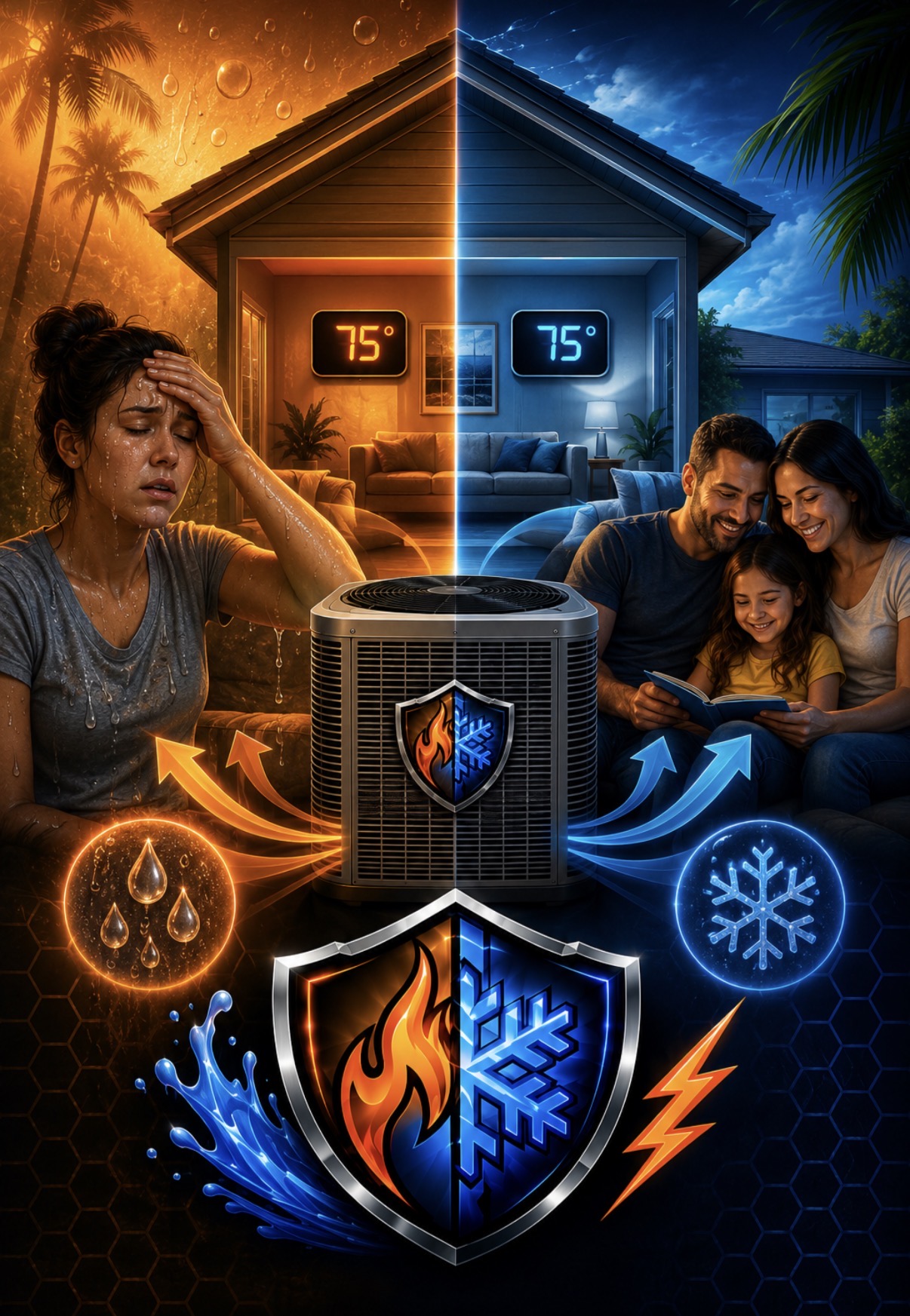
Why Humidity Makes a Home Feel Hotter
In Central Florida, the problem is rarely just temperature. It’s temperature plus moisture. When indoor humidity is high, your body can’t cool itself as efficiently, so a 75°F room can feel much warmer than it should.
That’s why two homes at the same thermostat setting can feel completely different. The one with better humidity control feels cooler, cleaner, and easier to live in.
What Humidity Does to Your Body
Your body cools itself mainly by sweating. When sweat evaporates, it pulls heat away from your skin. But when the air is already loaded with moisture, sweat evaporates more slowly.
That creates the “sticky” feeling many Florida homeowners know all too well. You may start:
- Feeling overheated even when the AC is running
- Sweating more indoors
- Sleeping poorly because the room feels stuffy
- Turning the thermostat down lower than necessary
This is also why many people think their AC is underperforming when the real issue is excess humidity.
Why Florida Homes Struggle with Humidity
Homes in Brevard, Orange, Osceola, Seminole, and Volusia counties deal with humidity almost year-round. In summer, outdoor air is hot and moisture-rich. Every time humid air leaks into the home, your HVAC system has to remove both heat and moisture.
That’s harder than cooling dry air.
Common causes of high indoor humidity include:
Air Leaks and Infiltration
Poorly sealed doors, windows, attic penetrations, and ductwork allow humid outdoor air to enter the home.
An Oversized or Short-Cycling AC
If your AC cools the house too quickly, it may shut off before it has enough runtime to remove moisture from the air.
Weak Dehumidification
Some systems are sized or set up to meet the cooling load, but not the latent load, which is the moisture load.
Poor Ventilation Balance
Bathrooms, kitchens, and laundry rooms can add a lot of humidity if exhaust fans are weak or not used consistently.
How Humidity Affects HVAC Performance
Humidity doesn’t just affect comfort. It affects system behavior.
When indoor moisture stays high, your AC has to work longer to make the house feel comfortable. That can lead to:
- Higher energy bills
- More wear on the compressor and blower
- Longer run times
- Uneven temperatures from room to room
- More risk of indoor air quality issues like musty odors or mold growth
In many Florida homes, the system is technically “cooling,” but it is not removing enough moisture to keep the space comfortable.
What Indoor Humidity Should Be
For most homes, the ideal indoor relative humidity is generally between 30% and 50%. In Central Florida, keeping it near the lower end of that range often makes a noticeable difference in comfort.
If your home regularly sits above 55% to 60% indoors, it will likely feel warmer than it should, especially in summer.
A simple hygrometer can help you monitor humidity in living areas and bedrooms. If you want a more accurate picture, measure it at different times of day and in different parts of the house.
Ways to Reduce Humidity and Improve Comfort
Keep the AC System Maintained
A clean evaporator coil, correct refrigerant charge, proper airflow, and a clear condensate drain all help your system remove moisture effectively.
Run the Fan the Right Way
In many cases, continuously running the blower can re-evaporate moisture off the coil and send it back into the home. Your system settings should be reviewed by a technician who understands humidity control.
Seal Air Leaks
Sealing leaks in the attic, around windows, and at duct connections reduces the amount of humid air entering the home.
Use Exhaust Fans
Run bathroom fans during showers and for a short period after. Use the kitchen hood when cooking to remove steam before it spreads.
Consider a Whole-Home Dehumidifier
If your AC is sized correctly but humidity still stays high, a dedicated whole-home dehumidifier can help maintain comfort without overcooling the house.
When Humidity Signals a Bigger Problem
If your home feels muggy even with the AC running, or you notice condensation on windows, musty smells, or damp spots around vents, the issue may be more than just weather.
It could point to:
- Undersized or oversized equipment
- Duct leakage
- Poor insulation
- Drainage issues at the air handler
- A failing component that is reducing dehumidification
These are all worth checking before the problem leads to mold, damaged finishes, or higher utility costs.
The Bottom Line
Humidity makes your home feel hotter because it interferes with the body’s natural cooling process and makes your HVAC system work harder to keep up. In Florida, comfort depends on more than temperature alone.
If your home feels sticky, warm, or hard to cool evenly, the issue may be indoor humidity control. A properly tuned system, good airflow, and tight building envelope can make a major difference.
If you’re dealing with a humid home in Central Florida, Savage Heating & Air can help diagnose the cause and recommend the right fix for your space. Call 321-804-4413 to schedule service.
Comfort starts with a call
Same-day HVAC service across Brevard, Orange, Osceola, Seminole & Volusia.
Call 321-804-4413