
How Pets Affect Your Home's Air Quality in Central Florida
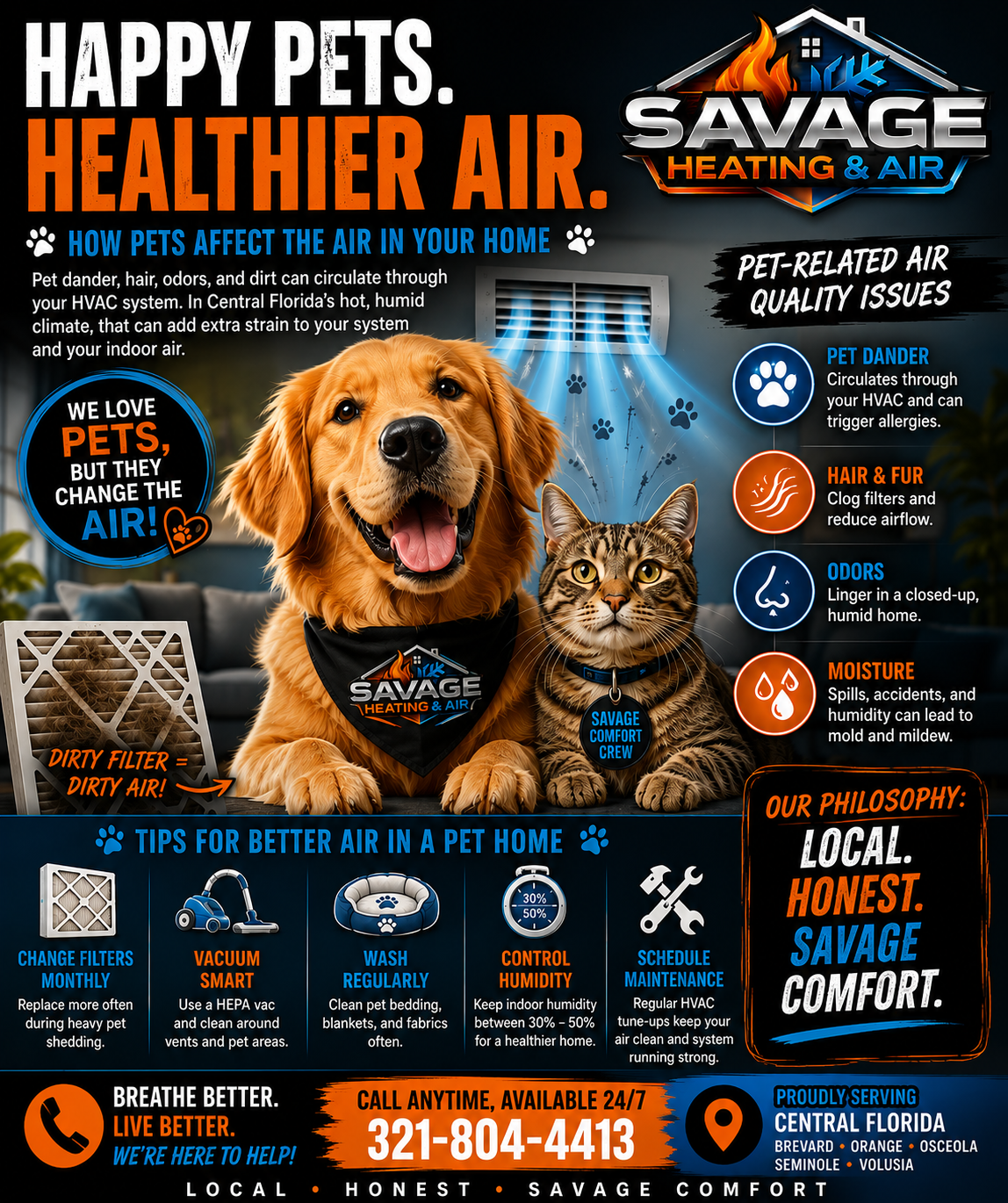
How Pets Change the Air Inside Your Home
If you live with pets, you already know they add love, energy, and a little extra cleanup. What many homeowners do not realize is that pets also change the air you breathe every day.
Pet dander, hair, saliva particles, tracked-in dirt, and odors can all circulate through your HVAC system. In Central Florida, where homes stay closed up for long stretches to fight heat and humidity, those contaminants can build up faster than you might expect.
For households in Brevard, Orange, Osceola, Seminole, and Volusia counties, indoor air quality is not just a comfort issue. It is part of how your HVAC system performs in a humid climate.
The Biggest Pet-Related Air Quality Issues
Pet dander is the main culprit
Pet dander is made of tiny skin flakes shed by cats, dogs, and other furry pets. It is lightweight, persistent, and easy to circulate through return vents.
Because it is so small, dander can stay airborne for long periods and collect in ducts, on filter media, and on supply registers. For allergy sufferers, this can mean more sneezing, itchy eyes, congestion, and asthma flare-ups.
Hair and fur clog filters and airflow paths
Pet hair does not usually cause allergies on its own, but it contributes to buildup on HVAC filters and around vents. When filters load up too quickly, airflow drops.
Reduced airflow can make your system work harder to cool the home, which is a bigger problem in Florida where air conditioners already run for long cycles through most of the year. That added strain can increase wear on the blower motor and reduce efficiency.
Odors can linger in a closed-up home
Even clean pets create natural odors from fur, bedding, litter boxes, and accidents. In humid homes, smells tend to linger longer because moisture holds odor particles in the air and in soft surfaces.
If your AC is not dehumidifying properly, pet odors can become more noticeable, especially in rooms with carpet, upholstery, or poor ventilation.
Moisture and pet messes can encourage mold
Florida homes already face a high mold risk because outdoor humidity is so intense. Pet accidents, wet paw traffic, water bowl spills, and damp bedding can add even more moisture indoors.
That extra moisture can feed mold growth on carpet padding, baseboards, air filters, and inside hidden HVAC components if the system is not draining and dehumidifying correctly.
Why Florida Homes Feel Pet Air Quality Problems More
Central Florida’s climate makes indoor air quality challenges more noticeable. When the outdoor air is hot and sticky, many homeowners keep windows closed and rely on the HVAC system almost nonstop.
That means pet particles stay inside longer instead of airing out. It also means your system must filter more contaminants while removing humidity at the same time. If your filter is weak, your ducts are dirty, or your system is oversized and short-cycling, pet-related air quality problems can get worse quickly.
Practical Ways to Improve Air Quality in a Pet Home
Change filters more often
In a home with pets, standard filter change timing is often not enough. Check filters monthly and replace them as needed, especially during heavy cooling season.
A higher-quality filter can help capture more dander, but the filter must still match your system’s airflow requirements. Too restrictive a filter can reduce performance if your HVAC is not designed for it.
Vacuum and dust with HVAC in mind
Use a vacuum with a HEPA-type filter if possible, and clean around return vents, baseboards, and pet hangout areas regularly. Dusting with a damp microfiber cloth helps prevent particles from getting stirred back into the air.
Keep pet bedding and fabrics clean
Wash blankets, cushions, and pet beds frequently. These items trap dander and odors and can become a major source of airborne particles when pets use them every day.
Control humidity
Keeping indoor humidity in check is one of the most effective ways to reduce pet odors and limit mold risk. In Florida, the ideal indoor humidity range is typically around 30% to 50%.
If your home feels sticky, smells musty, or never quite feels dry, your AC may need maintenance, repair, or help from a whole-home dehumidification solution.
Schedule duct and HVAC maintenance
If your system has not been serviced recently, pet dander and dust may be collecting where you cannot see it. A professional inspection can identify clogged filters, dirty coils, drainage issues, and duct problems that affect both comfort and air quality.
When to Call an HVAC Professional
Consider a professional visit if you notice:
- More allergy symptoms at home
- Persistent pet odors
- Dust building up quickly around vents
- Weak airflow in certain rooms
- A musty smell from the AC
- Higher indoor humidity than usual
These signs often point to an HVAC system that is not filtering, dehumidifying, or circulating air as well as it should.
Better Air Starts with Better HVAC Support
Pets do not have to mean poor indoor air quality. With the right filtration, humidity control, cleaning habits, and HVAC maintenance, you can keep your home comfortable for both people and pets.
If your Central Florida home feels damp, dusty, or harder to keep fresh with pets in the mix, Savage Heating & Air can help you get to the root of the problem and improve the air you breathe every day. Call 321-804-4413 to schedule service.
Related HVAC Services in Central Florida
Savage Heating & Air is here to help nearby homeowners. Explore related services:
Comfort starts with a call
Same-day HVAC service across Brevard, Orange, Osceola, Seminole & Volusia.
Call 321-804-4413