
How to Lower Humidity Without Cranking the AC in Florida
Why Humidity Feels Worse in Central Florida Homes
In our climate, humidity is not just a comfort issue. It affects how your home feels, how hard your AC has to work, and even the condition of wood flooring, drywall, insulation, and furniture.
When indoor relative humidity climbs above about 50%, the air starts to feel warmer and heavier. That is why some Florida homes feel muggy even when the thermostat says the temperature is reasonable. The goal is not to make the air colder than necessary. The goal is to remove excess moisture efficiently.
Keep Indoor Humidity in the Right Range
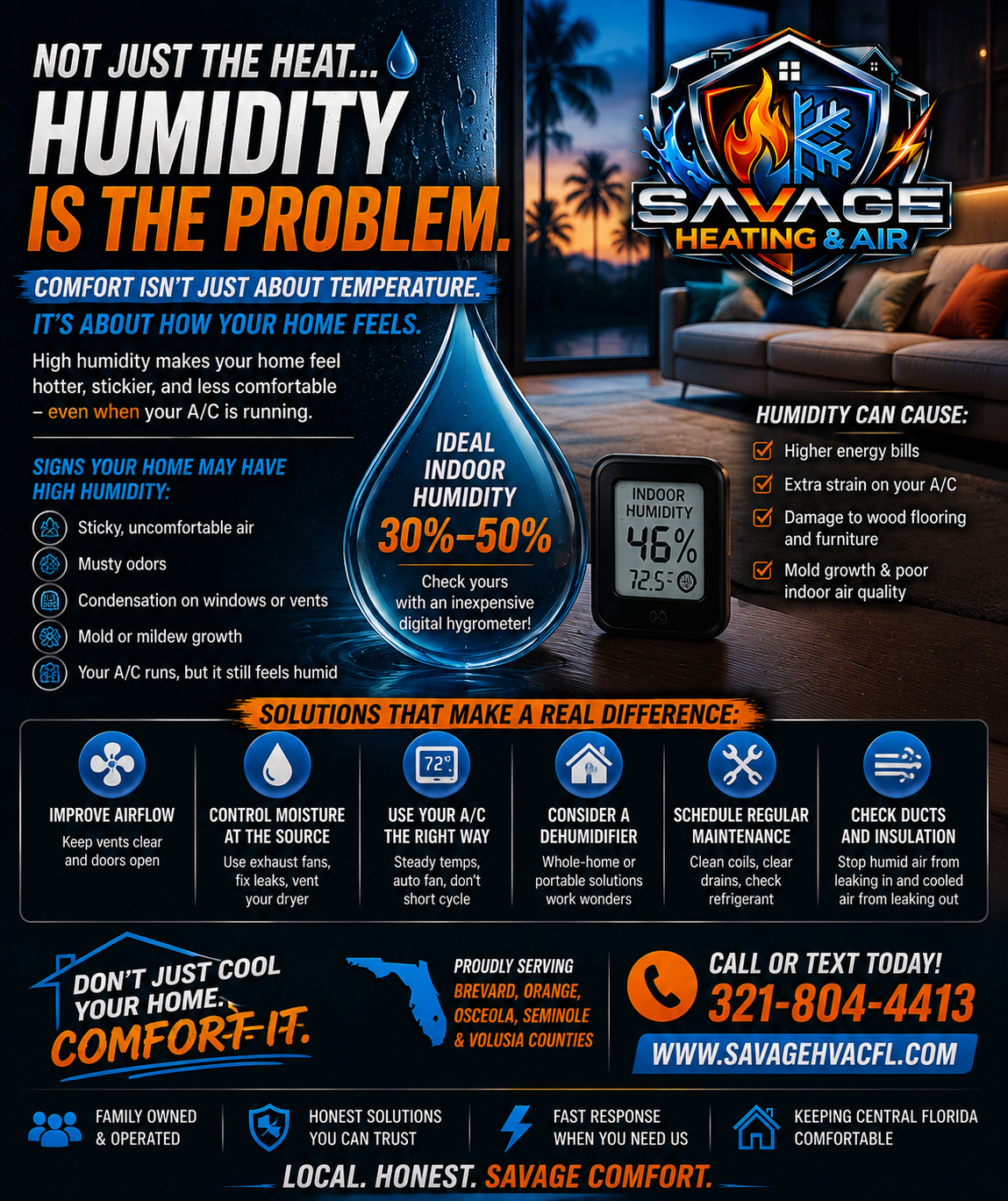
For most homes, the ideal indoor humidity level is about 30% to 50%. In Central Florida, staying at the lower end of that range during the summer can make a noticeable difference in comfort.
A simple digital hygrometer is one of the best tools you can buy for indoor air quality. It gives you a real reading instead of guessing based on how the air feels. If your home is consistently above 55%, there is usually a moisture problem that needs attention.
Why low humidity matters
Too much moisture can lead to:
- Sticky, uncomfortable indoor air
- Musty odors
- Condensation on windows and vents
- Mold growth in closets, bathrooms, and HVAC closets
- Extra strain on your cooling system
Use Your AC the Right Way
Your air conditioner does remove moisture, but it works best when it runs long enough to complete a proper cycle. Oversized systems, short cycling, and frequent thermostat changes can all reduce dehumidification.
If you are constantly lowering the thermostat to get rid of humidity, your system may be cooling quickly without running long enough to pull moisture from the air.
Better thermostat habits
- Set the thermostat to a steady temperature instead of making big changes throughout the day
- Avoid turning the system off for long periods in humid weather
- Use the fan setting carefully; “Auto” is usually better than “On” for humidity control because it helps prevent re-evaporating moisture off the coil
- If your thermostat has a dehumidification or “dry” mode, learn how to use it properly
Control Moisture at the Source
In Florida homes, the biggest humidity gains often come from stopping moisture before it spreads.
Bathroom and kitchen exhaust fans
Run the bathroom fan during showers and for at least 20 minutes afterward. Use the range hood when cooking, especially when boiling water or simmering food for long periods.
Dryer venting
Make sure your clothes dryer is vented properly to the outside. A damaged or disconnected vent can dump a lot of moisture into the home.
Plumbing and hidden leaks
A slow leak under a sink, in a wall, or around an air handler can raise indoor humidity and create mold risk. If one room always feels damp, do not assume it is just “Florida weather.”
Improve Airflow in Closed Spaces
Humidity often builds up in rooms with poor circulation, such as guest rooms, closets, laundry rooms, and homes with closed doors and blocked returns.
What helps
- Keep supply vents open and unobstructed
- Do not block return air grilles with furniture or rugs
- Leave interior doors open when possible to balance airflow
- Use a small fan to prevent stagnant air in problem rooms
Air movement does not remove moisture by itself, but it helps the home feel drier and allows your HVAC system to distribute conditioned air more evenly.
Consider a Dehumidifier for Problem Areas
If humidity stays high even when your AC is running correctly, a whole-home dehumidifier or a portable unit may be the right answer.
Whole-home dehumidifiers are especially useful in Florida because they can remove moisture without overcooling the home. That matters when the weather is warm but the air still feels damp, which is common during our rainy season.
Portable dehumidifiers can also help in targeted spaces like:
- Finished garages
- Musty bedrooms
- Basements in older homes
- Laundry rooms
- Closets with moisture buildup
Schedule Regular HVAC Maintenance
A neglected air conditioner often loses dehumidification performance. Dirty coils, clogged drain lines, low refrigerant, and airflow problems can all make your system cool unevenly while leaving the indoor air sticky.
Routine maintenance is one of the most effective ways to keep humidity under control without lowering the thermostat too far.
A professional tune-up should check
- Evaporator and condenser coil condition
- Condensate drain line and drain pan
- Refrigerant charge
- Airflow and filter condition
- Thermostat operation
- Duct issues that may be bringing in humid air
Watch for Duct Leaks and Attic Air Infiltration
In Central Florida, leaky ductwork can pull hot, humid attic air into the system or leak conditioned air out of the house. Either problem makes humidity control harder and raises energy use.
If certain rooms stay damp or unevenly cooled, duct leakage may be part of the issue. This is especially common in homes where ducts run through hot attics, garages, or crawl spaces.
The Bottom Line
Lowering humidity without cranking the AC comes down to a few practical steps: manage moisture at the source, improve airflow, keep your HVAC system clean and tuned, and add dehumidification when needed.
If your home still feels sticky after trying the basics, there may be an HVAC issue, duct problem, or ventilation challenge behind it. Savage Heating & Air helps homeowners across Brevard, Orange, Osceola, Seminole, and Volusia counties find the real cause of humidity problems and restore comfortable indoor air.
If you want help making your home feel drier without driving up cooling costs, contact Savage Heating & Air at 321-804-4413.
Related HVAC Services in Central Florida
Savage Heating & Air is here to help nearby homeowners. Explore related services:
Comfort starts with a call
Same-day HVAC service across Brevard, Orange, Osceola, Seminole & Volusia.
Call 321-804-4413