HVAC System Installation for Florida Homes
A new air conditioner is not a purchase most Florida homeowners plan for months in advance. Often, the decision arrives after repeated repairs, uneven cooling, rising electric bills, or a system that quits during a hot afternoon. A properly planned HVAC system installation can restore comfort, lower operating costs, and give your household more confidence through the longest cooling months of the year.
The equipment matters, but installation quality matters just as much. A high-efficiency system that is poorly sized, connected to leaking ducts, or set up incorrectly will not deliver the comfort or savings you expect. The right approach starts with an honest evaluation of your home and ends with testing that confirms the system is ready to perform.
When Replacement Makes More Sense Than Another Repair
Repair is often the right answer when a system has a clear, isolated problem and has otherwise been dependable. Replacing a capacitor, repairing a wiring issue, or fixing a drain line can extend the life of an air conditioner without turning a manageable issue into a major expense.
Replacement deserves serious consideration when repairs are becoming frequent, the system is near or beyond its expected service life, or an expensive component has failed. Many Central Florida systems work hard for much of the year, and older equipment can lose efficiency long before it stops running completely. If your home feels humid even when the AC is operating, some rooms stay warmer than others, or your energy bills have climbed without a change in usage, the system may no longer be meeting the home’s needs.
There is no single age at which every unit should be replaced. A well-maintained system may still have useful life left, while a neglected unit may need replacement sooner. The practical question is whether the cost and uncertainty of continued repairs make sense compared with investing in reliable equipment and a fresh warranty.
HVAC System Installation Starts With Proper Sizing
One of the most common installation mistakes is assuming bigger equipment will cool a home better. It will cool quickly, but that is not always a benefit. An oversized system can turn on and off too often, a process called short cycling. Short cycles can leave humidity behind, create uneven temperatures, increase wear on components, and waste energy.
An undersized system has the opposite problem. It may run for long periods without reaching the thermostat setting during peak heat, putting extra strain on the equipment while leaving the house uncomfortable.
Correct sizing should account for more than square footage. A qualified contractor considers the home’s layout, insulation, window exposure, ceiling height, number of occupants, duct condition, and heat entering from the attic or garage. Recent renovations also matter. Adding a room, replacing windows, or changing insulation can alter how much cooling capacity your home needs.
For Florida homeowners, humidity control should be part of this conversation. Comfortable indoor air is not just about temperature. A system that runs and dehumidifies properly can make a home feel better at a slightly higher thermostat setting and help reduce that damp, sticky feeling common during the rainy season.
Choosing Equipment That Fits Your Home and Budget
New HVAC equipment comes with more options than most homeowners expect. The goal is not to buy the most expensive system available. It is to select dependable equipment that fits your home, priorities, and budget.
Efficiency ratings are one part of the decision. Higher-efficiency systems can reduce energy use, especially in a climate with long cooling seasons. However, the upfront cost is higher, and the payback depends on how often you run the system, local utility rates, your current equipment’s condition, and how long you expect to stay in the home. For some households, a dependable mid-range system installed correctly is the most sensible choice.
Comfort features also vary. A single-stage system operates at full capacity when it runs. Two-stage and variable-capacity systems can adjust output more gradually. These options may provide steadier temperatures and better humidity control, but they may require a larger initial investment. The best choice depends on the home and how much value you place on quieter operation, even comfort, and lower energy consumption.
A good installation estimate should clearly identify the equipment being proposed and explain why it fits your situation. If a recommendation is based only on what is in stock or what appears to match your old unit, ask for a fuller explanation.
Do Not Overlook Ductwork and Airflow
Your AC system cannot perform well if conditioned air never reaches the rooms that need it. Ductwork is easy to overlook because it is usually hidden in an attic, ceiling, or crawl space, but it has a direct effect on comfort and efficiency.
Leaking ducts can send cooled air into unconditioned spaces. Poorly designed or damaged ducts can restrict airflow and force the new system to work harder. In some homes, rooms farthest from the air handler never cool properly because of airflow problems rather than a failing outdoor unit.
Before installation, the contractor should inspect accessible ductwork and discuss issues that could limit the performance of new equipment. Not every replacement requires new ducts. Sometimes targeted repairs, sealing, insulation, or adjustments to supply and return vents are enough. In other cases, major duct improvements are necessary to avoid installing a new system on top of an old comfort problem.
The same is true for the thermostat. A basic thermostat may be appropriate for a straightforward replacement, while a compatible smart thermostat can offer scheduling and monitoring benefits. Compatibility matters, particularly with staged or variable-capacity equipment. The thermostat should support the system rather than limit its capabilities.
What to Expect During Installation Day
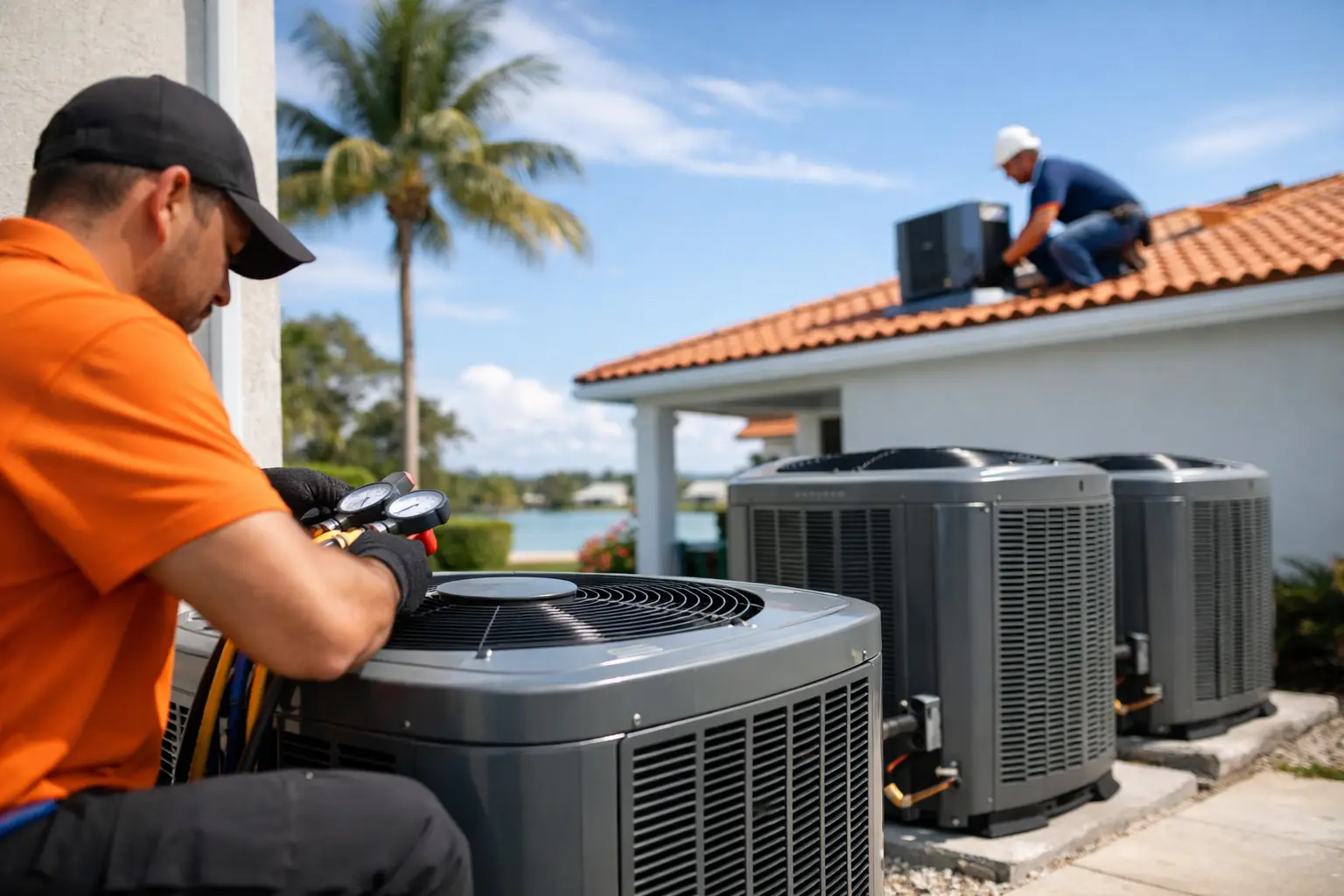
A professional installation is more than removing one unit and setting another in its place. The process begins with protecting work areas and safely disconnecting and removing the old equipment. The team then prepares the indoor and outdoor locations, installs the new components, connects electrical and refrigerant lines, and addresses drainage.
Drainage deserves special attention in Florida’s humid climate. Air conditioners remove moisture from indoor air, and that water has to drain properly. A poorly installed or clogged condensate drain can lead to water damage, shutdowns, and unnecessary service calls. The drain system should be checked as part of the installation process.
Once equipment is connected, technicians should test operation, verify airflow, confirm refrigerant performance, and make sure the thermostat is communicating correctly. Depending on the project, installation may take most of a day. More extensive work involving duct modifications, electrical changes, or difficult access can take longer.
Before the crew leaves, you should know how to operate the thermostat, where the filter is located, what size filter to use, and what maintenance the system needs. You should also receive clear information about warranty coverage and any required registration steps.
Questions Worth Asking Before You Approve an Estimate
An estimate should help you make a confident decision, not create more confusion. Ask whether the proposed system has been sized for your home, whether ductwork and airflow were evaluated, and what work is included beyond the equipment itself. Clarify whether permits, electrical updates, drain line work, haul-away, and startup testing are included in the quoted price.
It is also reasonable to ask about labor warranties, manufacturer warranty requirements, expected installation timing, and whether the company will explain the completed system before leaving. Price matters, but the lowest quote is not always the best value if essential steps are excluded or installation details are left unclear.
For homeowners dealing with an unexpected failure, fast service matters too. Savage Heating & Air provides residential replacement guidance alongside same-day AC repair, helping homeowners understand whether a repair can reasonably keep the system going or whether replacement is the more practical path. Clear pricing and no overtime charges help keep an urgent comfort problem from becoming a financial surprise.
Protecting Your New System After Installation
A new system still needs regular attention. Change filters on schedule, keep outdoor equipment clear of leaves and debris, and avoid blocking supply or return vents with furniture. These simple habits support airflow and reduce avoidable strain.
Professional preventive tune-ups are equally valuable. A technician can inspect electrical connections, check drainage, clean components, measure performance, and catch small issues before they become a no-cooling call. Maintenance does not eliminate every breakdown, but it gives your system a better chance to operate efficiently through Florida heat and humidity.
The best time to discuss replacement is before an aging system fails completely. Even if your equipment is still running, an evaluation can give you the information needed to plan on your terms, compare options carefully, and make a comfort decision without the pressure of a sweltering house.
Comfort starts with a call
Same-day HVAC service across Brevard, Orange, Osceola, Seminole & Volusia.
Call 321-804-4413