Signs Your AC Compressor Is Failing in Central Florida
What the AC compressor actually does
The compressor is the heart of your air conditioner. It pressurizes refrigerant and keeps it moving between the indoor and outdoor coils so your system can pull heat out of your home.
In Central Florida, that job never really stops. Between high heat, humidity, and long run times, compressors work harder here than they do in milder climates. When a compressor starts to fail, your AC often shows warning signs before it quits completely.
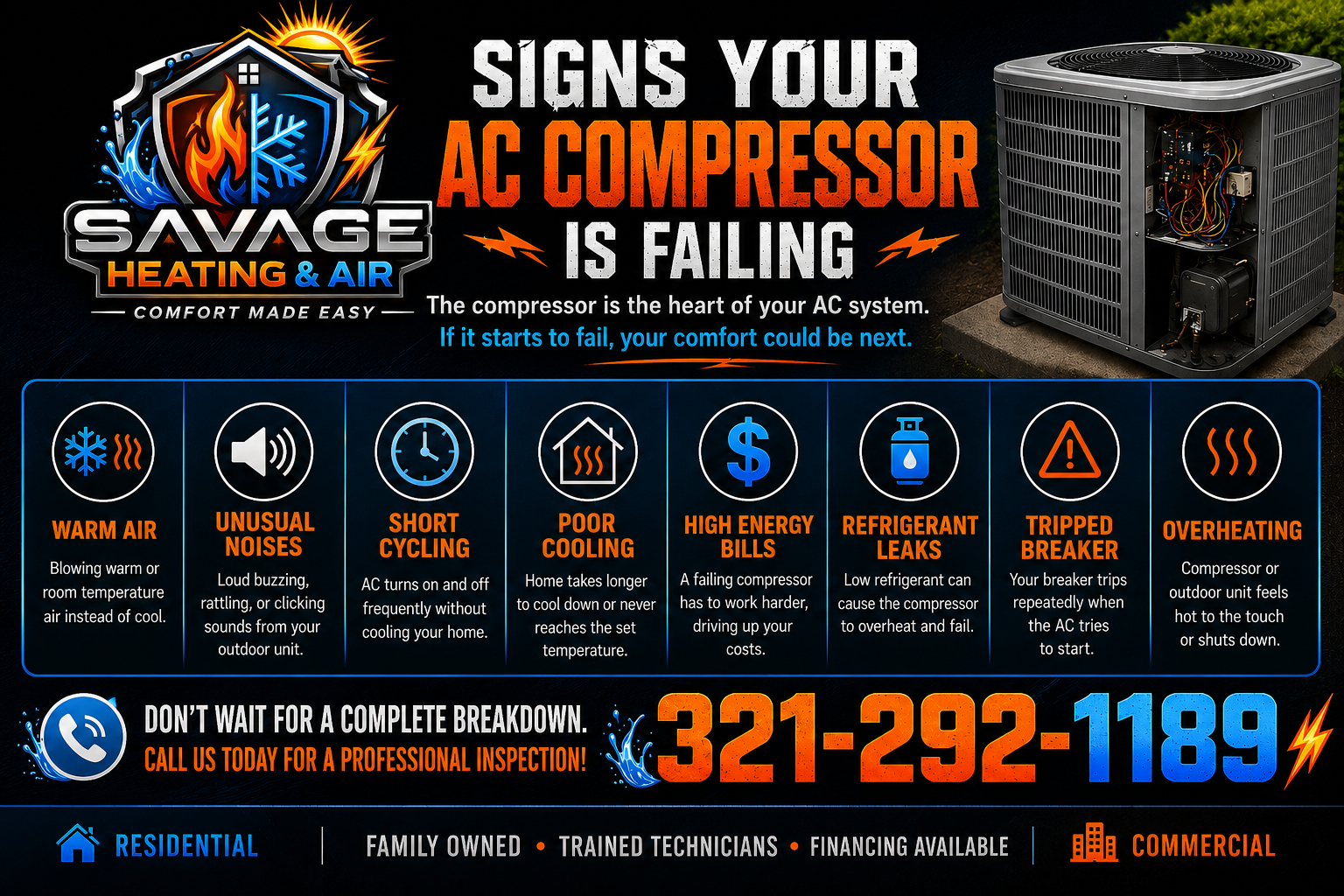
1. Warm air is coming from the vents
If your thermostat is set to cool but the air coming out feels warm or barely cool, the compressor may not be doing its job.
This symptom can also point to refrigerant issues, electrical problems, or a failing fan motor, but the compressor is a common culprit when the indoor unit runs without delivering much cooling. In Florida heat, that kind of failure becomes noticeable fast.
2. The outdoor unit sounds louder than usual
A healthy compressor should run with a steady hum. If you hear grinding, rattling, clanking, buzzing, or a hard-starting noise when the system kicks on, that is not normal.
Different sounds can indicate different problems:
Grinding or screeching
May mean internal mechanical damage.
Loud buzzing
Can point to an electrical issue, failing capacitor, or compressor trouble.
Clicking or repeated starting attempts
Often means the compressor is struggling to start.
If the noise is new or getting worse, schedule service sooner rather than later.
3. Your breaker keeps tripping
A compressor that is drawing too much power can trip the breaker repeatedly. That can happen when the motor is overheating, shorting out, or locked up.
Do not keep resetting the breaker over and over. Repeated trips are a safety warning, not a nuisance to ignore. In homes across Brevard, Orange, Osceola, Seminole, and Volusia counties, electrical stress on an overworked AC is a common sign that repair is needed.
4. The AC struggles to start or shuts off quickly
If your air conditioner hesitates before starting, runs for a short time, then shuts down, the compressor may be weakening.
You may notice:
- Delayed startup
- Short cycling
- The outdoor unit trying to start multiple times
- The indoor fan running while cooling never really begins
Sometimes the issue is the capacitor or contactor, not the compressor itself. A good technician can test the system and identify the true cause before parts are replaced unnecessarily.
5. Your energy bills are climbing
A failing compressor often works harder to produce less cooling. That inefficiency shows up on your utility bill.
If your usage habits have not changed but your monthly electric bill keeps rising, and your AC seems to run almost constantly, the compressor may be losing efficiency. In Florida, where air conditioning already accounts for a large share of summer energy use, even a small drop in performance can become expensive quickly.
6. The outdoor unit vibrates or shakes abnormally
Some vibration is normal, but excessive shaking can mean the compressor is mounted poorly, wearing out, or experiencing internal failure.
You may also notice the outdoor unit feels hotter than usual or the fan is moving air while the system still fails to cool well. Those are signs that the compressor may not be transferring heat properly.
7. The system trips on high pressure or overheats
If the AC is shutting down due to pressure issues or overheating, the compressor may be part of the problem.
This is especially common when:
- Coils are dirty
- Airflow is restricted
- Refrigerant levels are incorrect
- The compressor is aging and running inefficiently
Because Florida AC systems deal with heavy humidity, dirty coils and poor airflow can strain the compressor even more. Routine maintenance helps reduce that wear.
What to do if you suspect compressor trouble
Do not wait for a complete breakdown in the middle of a Central Florida heat wave. Turn the system off if you hear loud mechanical noises, smell burning, or notice repeated breaker trips.
Then have a licensed HVAC technician inspect the system. A compressor diagnosis should include electrical testing, refrigerant checks, and airflow evaluation. In some cases, the issue is repairable with a part like a capacitor or contactor. In others, a failing compressor may make replacement the more cost-effective option.
Preventing compressor failure in Florida
You cannot eliminate wear entirely, but you can reduce the risk.
Schedule seasonal maintenance
A tune-up can catch low refrigerant, dirty coils, weak capacitors, and airflow problems before they damage the compressor.
Replace air filters regularly
Restricted airflow forces the system to work harder and can contribute to overheating.
Keep the outdoor unit clean
Trim back plants, remove debris, and make sure the condenser has room to breathe.
Don’t ignore small performance changes
Weak cooling, longer run times, and unusual sounds are early warnings. Acting early often saves money.
Get expert help before the compressor fails completely
If your AC is showing any of these warning signs, Savage Heating & Air can help diagnose the problem and recommend the right fix for your home. We serve families across Central Florida with honest, local HVAC service designed for our hot, humid climate.
Related HVAC Services in Central Florida
Savage Heating & Air is here to help nearby homeowners. Explore related services:
Comfort starts with a call
Same-day HVAC service across Brevard, Orange, Osceola, Seminole & Volusia.
Call 321-804-4413