When to Replace a Home Air Conditioner Unit
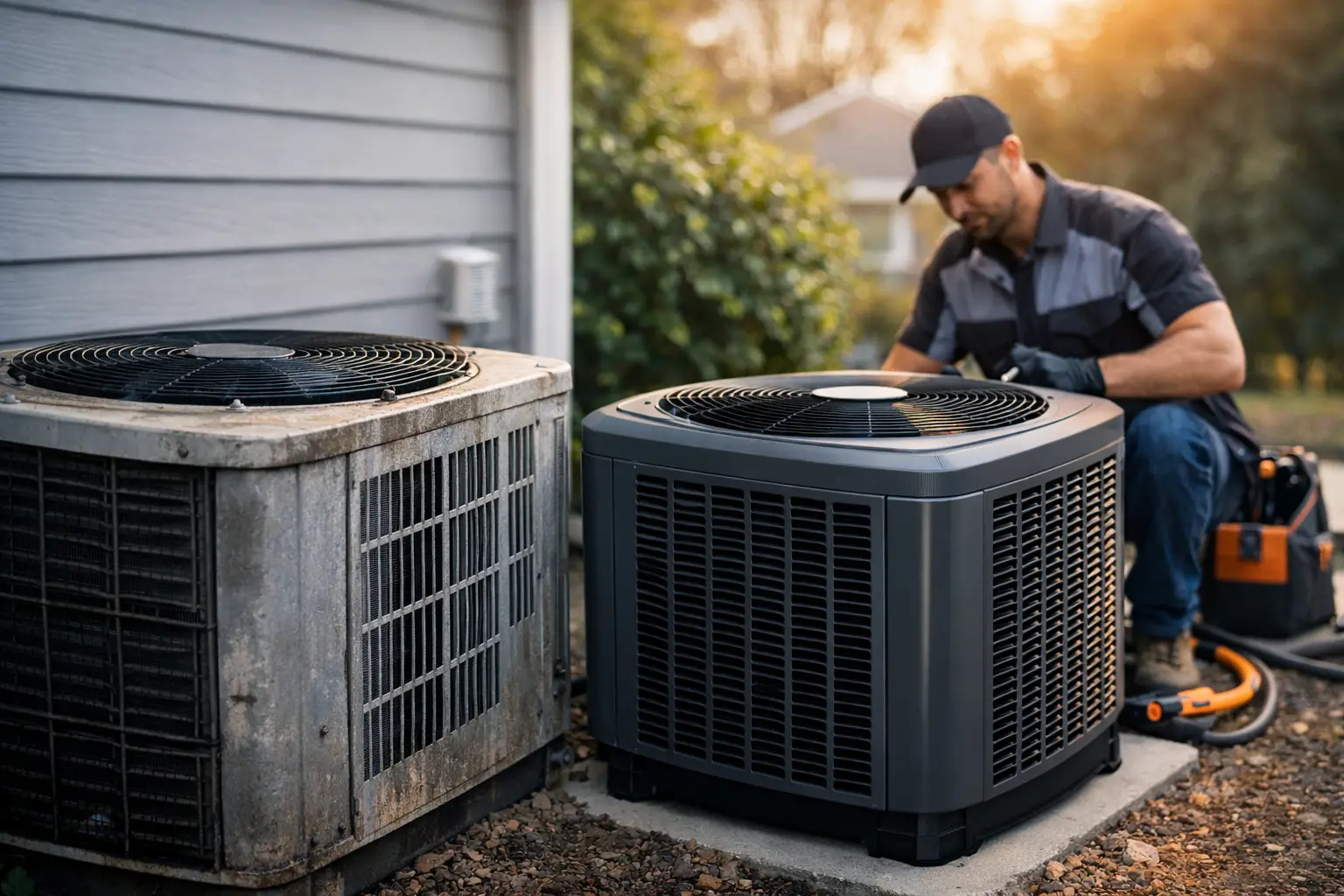
A Central Florida AC can seem fine at breakfast and struggle to keep the house comfortable by midafternoon. That is why knowing when to replace home air conditioner equipment is more than a budgeting question. It can prevent a stressful breakdown during the hottest stretch of the year, reduce repeated repair costs, and help your home manage Florida humidity as well as temperature.
Replacement is not always the answer. Many cooling problems have a practical repair, especially when the system is newer and the issue is isolated. The right decision comes down to the unit’s age, condition, repair history, efficiency, and ability to keep your home comfortable.
When to Replace a Home Air Conditioner Instead of Repairing It
A qualified technician should inspect the system before anyone recommends a replacement. A dirty component, worn capacitor, clogged drain line, or thermostat problem can cause poor cooling without meaning the whole system has reached the end of its useful life.
Still, replacement becomes the more sensible path when repairs are frequent, expensive, or unlikely to restore dependable performance. In Florida, an air conditioner that technically runs but cannot control humidity or cool the home evenly is not doing the job homeowners need it to do.
Your AC is 10 to 15 years old
Most central air conditioning systems last about 10 to 15 years, though maintenance, installation quality, usage, and local conditions all affect that range. In Central Florida, long cooling seasons place more demand on equipment than in climates where AC runs only a few months each year.
Age alone does not require replacement. A well-maintained 11-year-old system with a minor, first-time repair may have useful life left. But once an older unit needs a major repair, it is worth comparing that repair cost with the value of a newer, more efficient system and a fresh manufacturer warranty.
Repair calls are becoming routine
One repair does not make an AC unit unreliable. Several repairs in a short period are different. If you have replaced parts repeatedly, scheduled service more than once or twice in a season, or find yourself worrying about the next failure, the system may be nearing retirement.
Pay attention to the pattern, not just the latest invoice. A system with a history of refrigerant leaks, electrical failures, blower issues, or compressor trouble can become more expensive to keep running than it is worth. Frequent breakdowns also leave your family vulnerable to losing cooling when demand for AC service is highest.
The repair is costly compared with the unit’s value
A major compressor, coil, or refrigerant-related repair can be a difficult decision on an aging system. There is no universal percentage that automatically means replace, because equipment size, repair type, home comfort needs, and available budget all matter.
As a practical rule, get a clear estimate for the repair and ask how likely the rest of the system is to remain reliable afterward. A smaller repair may be the right choice if the unit is relatively young. A costly repair on a 12- or 14-year-old system may only postpone a larger expense while offering no improvement in comfort or energy use.
Cooling is uneven or humidity stays high
Florida homeowners often notice replacement-level performance problems before the system stops altogether. Bedrooms may stay warm while the living room feels cold. The thermostat may reach its setting, but rooms still feel sticky. Or the AC may run for long stretches without providing the comfortable, dry indoor air you expect.
Some of these issues can be repaired or corrected through airflow adjustments, duct improvements, thermostat settings, or maintenance. Others point to an aging system that no longer has the capacity or control needed for the home. An evaluation should consider the complete system, including ducts and insulation, rather than treating every hot room as proof that a larger AC is needed.
Energy bills rise without another explanation
A higher summer power bill can result from utility rates, thermostat changes, more people at home, or exceptionally hot weather. But if your usage habits have stayed about the same and cooling costs keep climbing, the AC may be losing efficiency.
Older systems typically use more electricity than current high-efficiency equipment, particularly if they have worn components, airflow restrictions, or refrigerant issues. Replacing an inefficient unit can lower operating costs, but savings should be viewed realistically. The best system is properly sized and installed for your home, not simply the model with the highest advertised efficiency rating.
Your system uses an outdated refrigerant
Older equipment may use R-22 refrigerant, which is no longer produced or imported in the United States. Existing recovered supplies can still be used for service, but availability and cost can make a significant leak repair expensive and uncertain.
If an R-22 system has a minor issue and is otherwise operating well, a repair may still make sense. If it has a substantial leak, needs a major component, or is near the end of its expected lifespan, replacement usually deserves serious consideration. A new system uses a current refrigerant and avoids tying your comfort to an increasingly limited supply.
Signs That Call for Fast AC Service First
Not every warning sign means you need a new unit. Some problems need prompt attention precisely because a timely repair can protect the system from further damage. Call for service if the AC blows warm air, freezes up, makes loud or new noises, cycles on and off rapidly, leaks water inside, or trips a breaker.
Turn the system off if you smell burning, see smoke, or hear severe grinding or banging. Continuing to run equipment with an electrical or mechanical fault can worsen the damage. During a Central Florida heat wave, a same-day AC repair visit can help determine whether the problem is a repairable failure or the point where replacement makes better financial sense.
How to Compare Repair and Replacement Costs
Ask for information you can use, not just a yes-or-no recommendation. A helpful HVAC professional should explain what failed, why it failed, what the repair includes, and whether there are visible concerns with other major components.
When considering replacement, compare more than the purchase price. Consider the estimated operating cost, warranty coverage, expected life of the new equipment, humidity control, and whether your current system has been properly sized for the home. If additions, window replacements, insulation upgrades, or household changes have happened since the last installation, the original AC size may no longer be ideal.
Installation quality matters as much as the equipment choice. Correct sizing, refrigerant charge, duct connections, drainage, and airflow all affect how efficiently and reliably a new system operates. An oversized system can cool too quickly and leave humidity behind. An undersized system can run constantly and struggle during peak heat.
Do Not Wait for a Complete Breakdown If You Have Options
Waiting until the AC fails completely may feel practical, but it limits your choices. An emergency replacement during the hottest week of the year can add pressure to an already stressful decision. Planning ahead gives you time to compare options, discuss efficiency levels, and choose equipment that fits your household and budget.
That does not mean replacing a working unit just because it has reached a certain birthday. It means paying attention when age, repair history, comfort problems, and energy use start pointing in the same direction. Annual maintenance also helps identify those changes early, before a small concern becomes a no-cooling emergency.
For homeowners across Central Florida, Savage Heating & Air can assess an underperforming system, explain the repair and replacement options clearly, and help you make a decision without pressure. Same-day service and no overtime charges can make a difficult AC problem easier to address when comfort cannot wait.
If your air conditioner is still dependable, maintain it and keep getting value from it. If it is asking for more money, more attention, and longer run times every summer, a straightforward evaluation now may give you a more comfortable home long before the next heat wave arrives.
Comfort starts with a call
Same-day HVAC service across Brevard, Orange, Osceola, Seminole & Volusia.
Call 321-804-4413