Your AC Can Survive a Lot… But It Doesn’t Like Being Electrocuted: How Power Surges Can Damage Your HVAC System
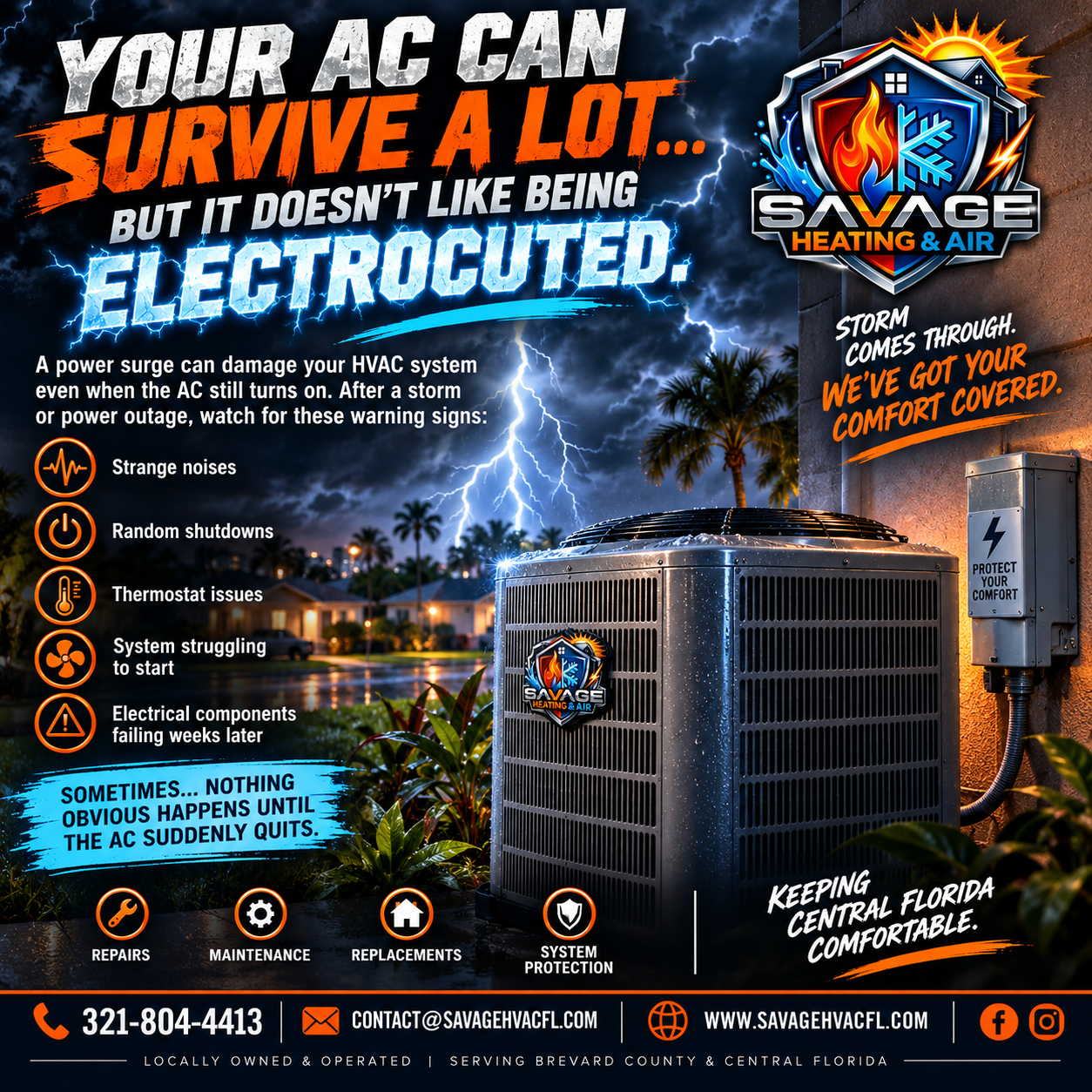
Your AC Can Survive a Lot… But It Doesn’t Like Being Electrocuted
Central Florida homeowners are no strangers to thunderstorms.
Lightning, heavy rain, strong winds, and sudden power outages are all part of living in Florida.
But there is another storm-related problem many homeowners don't think about:
Power surges.
And your HVAC system may be one of the appliances in your home most vulnerable to electrical problems.
A power surge can damage HVAC components even when your air conditioner still turns on and appears to be working normally.
Sometimes the damage is obvious.
Sometimes it isn't.
And sometimes the problem doesn't show up until days, weeks, or even months later.
What Is a Power Surge?
A power surge is a sudden increase in electrical voltage moving through your home's electrical system.
Surges can happen for several reasons, including:
- Lightning strikes
- Utility power interruptions
- Power being restored after an outage
- Electrical grid switching
- Problems with utility equipment
Even a brief surge can expose sensitive electronic and electrical components to voltage levels they weren't designed to handle.
Your HVAC system contains several of those components.
Why Your AC Doesn't Like Power Surges
Modern HVAC systems rely on much more than a compressor and a fan.
Today's equipment can contain:
- Control boards
- Capacitors
- Contactors
- Motors
- Thermostats
- Sensors
- Variable-speed electronics
- Inverter components
- Communication controls
A significant electrical surge can damage or weaken these components.
In some cases, a component may fail immediately.
In others, the system may continue operating even though a component has been damaged or weakened.
That's what makes electrical damage especially frustrating for homeowners.
Your AC can still be running while something is already wrong.
Warning Signs Your HVAC System May Have Been Affected
After a major storm, lightning event, or power outage, pay attention to changes in how your HVAC system operates.
Some warning signs can include:
- Strange noises from the indoor or outdoor unit
- Random system shutdowns
- The thermostat behaving differently
- The system struggling to start
- Delayed startup
- Reduced cooling performance
- Breakers tripping
- Unusual electrical or burning smells
- Error codes appearing on the thermostat
- Components failing unexpectedly
One unusual sound doesn't automatically mean your system suffered surge damage.
However, a noticeable change in system behavior after a major electrical event is worth paying attention to.
The Problem With "It Still Works"
This is one of the biggest misconceptions homeowners have after a storm.
They may think:
"The AC is still running, so everything must be fine."
Not necessarily.
A system can continue operating after an electrical event while a component has been stressed or damaged.
Think about it like this:
Your car might still drive after a warning light comes on.
That doesn't mean there isn't a problem.
The same basic idea applies to your HVAC system.
If something changed after a storm or power interruption, don't automatically assume it's nothing.
What Should You Do After a Major Storm?
If your home experiences a significant storm, lightning event, or prolonged power outage, take a few minutes to pay attention to your HVAC system.
1. Check the Thermostat
Make sure the thermostat is displaying normally and responding to temperature changes.
2. Listen to the System
Pay attention to unusual buzzing, clicking, humming, grinding, or repeated startup attempts.
3. Watch the Outdoor Unit
Make sure the outdoor unit is operating normally when the system calls for cooling.
4. Pay Attention to the Breaker
If the HVAC breaker trips repeatedly, don't continue resetting it over and over.
There may be an underlying electrical problem that needs to be diagnosed.
5. Don't Ignore Changes
If your system suddenly behaves differently after a storm, consider having it inspected by a qualified HVAC professional.
Catching a problem early can help prevent a small issue from becoming a much larger repair.
Can You Protect Your HVAC System From Power Surges?
There is no way to guarantee that an HVAC system will never experience electrical damage.
However, homeowners can take steps to reduce electrical risks.
Depending on your home's electrical setup and HVAC equipment, options may include:
- Whole-home surge protection
- HVAC-specific surge protection
- Proper electrical grounding
- Professional inspection of electrical connections
- Routine HVAC maintenance
- Having storm-related electrical problems evaluated promptly
A qualified electrician can help determine the appropriate whole-home electrical protection for your property.
An HVAC professional can also evaluate the electrical components associated with your heating and cooling equipment.
Don't Assume the Worst — Get the System Checked
Not every HVAC problem after a storm is caused by a power surge.
A capacitor could fail.
A contactor could wear out.
A motor could have another issue.
A thermostat could malfunction.
Or your system may simply have experienced an unrelated failure.
That's why proper diagnosis matters.
Instead of guessing, a professional HVAC technician can evaluate the system and help determine what is actually happening.
Storm Damage Doesn't Always Look Like Storm Damage
One of the most frustrating things about electrical problems is that the damage isn't always obvious.
You may not see scorch marks.
You may not hear anything unusual.
You may not notice a problem immediately.
Then, weeks later, the system stops working.
That's why paying attention to changes in performance after major electrical events is important.
Sometimes the warning sign isn't that your AC stopped working.
Sometimes the warning sign is that it started working differently.
Savage Heating & Air Is Here When the Storm Passes
At Savage Heating & Air, we understand how important your HVAC system is—especially during Florida's extreme weather.
When your system isn't behaving normally, our goal is to find out why.
We can help diagnose HVAC electrical problems, startup issues, cooling problems, and other concerns that may appear after a storm or power event.
Our approach is simple:
- Diagnose the problem
- Explain what we're finding
- Answer your questions
- Present your options
- Help you make an informed decision
No guessing. No unnecessary panic. Just professional HVAC service and straight answers.
Storm Comes Through. We've Got Your Comfort Covered.
Florida weather isn't going anywhere.
Neither are the storms.
And while you can't control when lightning strikes or when the power goes out, you can pay attention to what your HVAC system does afterward.
If your AC starts making strange noises, shutting down, struggling to start, or behaving differently after a storm, don't ignore it.
Your AC can survive a lot… but it doesn't like being electrocuted.
Need Your HVAC System Checked?
Contact Savage Heating & Air today.
📞 Call or Text: 321-804-4413
✉️ CONTACT@SAVAGEHVACFL.COM
🌐 WWW.SAVAGEHVACFL.COM
We're proud to provide professional heating and cooling service throughout Central Florida.
Savage Heating & Air — Local. Honest. Savage Comfort.
Comfort starts with a call
Same-day HVAC service across Brevard, Orange, Osceola, Seminole & Volusia.
Call 321-804-4413